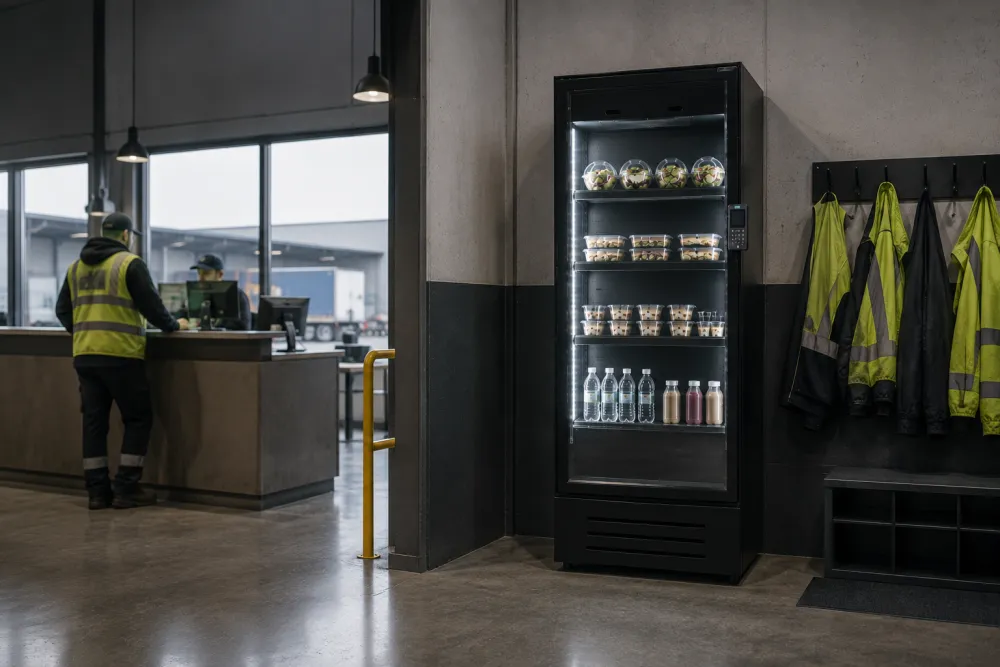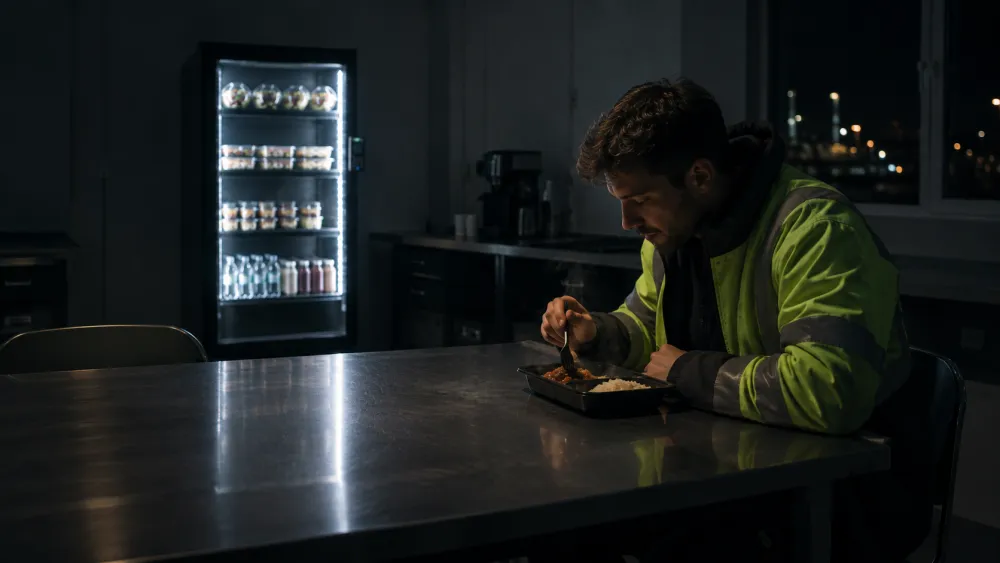
A night shift eats differently from a day shift. The break falls at an hour when few people are really hungry, the hunger comes later anyway, and what is there at that point decides how the last two hours of the shift go. Below is what night shifts actually take, and why a rack of chocolate bars is not enough. Looking mainly for the organisation (restocking, cost, payment)? Read how to organise it in practice.
On most night shifts the break falls somewhere in the middle, and that is exactly when some people are not really hungry. What is left is a dip later in the night, when nothing more is planned. Anyone who only finds dry snacks then does not get far.
A night range is therefore built from something filling for the break and something small that is still waiting later in the night. You do not need to change the break time; it depends on what is in the fridge.
These are patterns we see again and again on night sites, not medical advice. For individual dietary questions, your occupational health service is the right place.
What works:

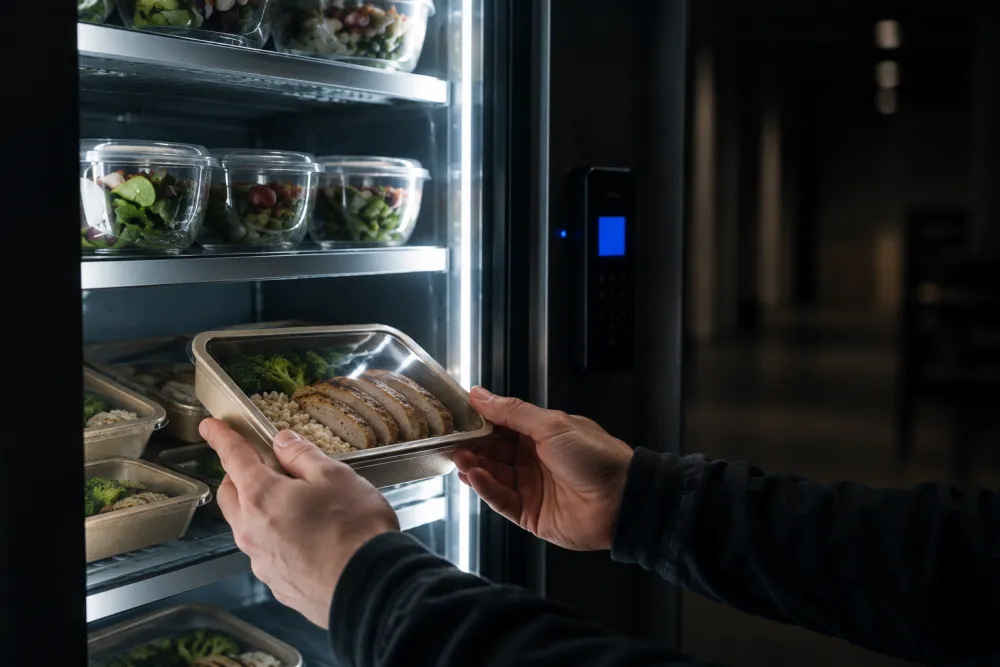
Fresh hot meals (pasta, curry, stew, soup) to heat in the microwave that is already there. They fill you up without sitting like lead.
High-protein meal preps, yoghurt, fruit and nuts for the dip that only comes after the break, when nothing more is planned.
Halal, kosher, vegetarian and vegan meals in the range, because night shifts are rarely all alike.
If you want the same range for the day and late shifts too, the full make-up is on the overview page.

Night shifts have their own rule of thumb: lighter rather than heavier, and spread over the shift. A proper but not too heavy hot meal around the middle of the shift, with something small earlier or later, keeps people going better than a big plate at three in the morning. What works best varies by person; an occupational health doctor or dietitian can advise more precisely than we can.
Because it offers dry, sugary products at the moment people need a meal. A bar and a can get you through an hour, and a shift lasts eight. We see the same thing every time: the machine sells at night, and still the complaints about tiredness and hunger near the end of the shift remain.
Yes. Fresh meals from the fridge are heated on site in the microwave that most break rooms already have. It is not a restaurant meal, but it is a hot plate at an hour when no kitchen is open, and that is what night shifts themselves name as the difference.
We do not give individual nutrition advice. What we do see on sites with physical night work: meals with a solid protein content are chosen clearly more often than sweet products, and the fridge does better with high-protein meal preps than with classic snacks. For concrete guidelines for your teams, check with your occupational health service.
Night shifts are often the most mixed shifts on a site. If the only range on offer is one part of the team does not eat, those people get nothing from the fridge and use drops quickly. Halal, kosher, vegetarian and vegan meals are therefore part of the possible make-up.
Eight short questions about your shifts, your hours and what is there now. We call you back with a proposal for a range that still makes sense at three in the morning.
Takes about 90 seconds · no obligation · no contact details until the last step