Anyone who starts at five or six has rarely eaten yet. By half past seven the first dip arrives, and nothing is open: the canteen only starts around lunchtime, the bakery at eight, and the sandwich service delivers for lunch. In offices, a milder version hits people who come in early to beat the traffic. Below: how to close that morning gap without a kitchen or staff.
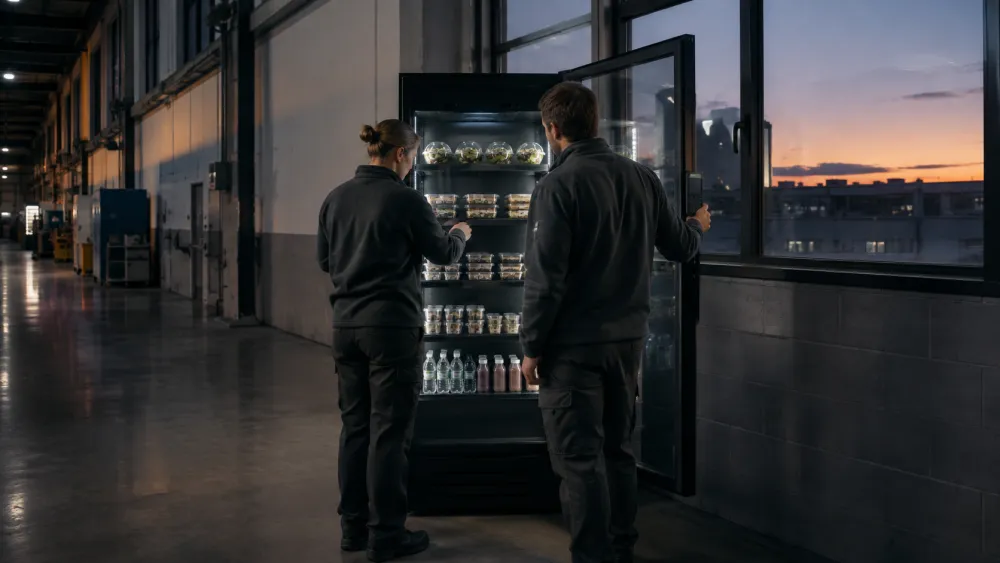
Lunchtime gets all the attention: that is what the canteen, the sandwich service and the meal allowance are for. The morning slips between the cracks because it is short and scattered. Yet for a shift that starts at six, it is the first moment anything is needed, and there is nothing. In a warehouse it is the rule; see a smart fridge for a warehouse.
Anyone who brought nothing puts it off until the break, or takes a bar from the machine. Breakfast can be small. But it has to be ready when the shift arrives, without anyone having to set it out.
| Approach | Who does the work | Covers five to eight | Weak point |
|---|---|---|---|
| Eating at home | The employee | Yes, if it works out | Rarely works at four in the morning |
| Bringing your own | The employee | Yes | Falls apart on a day that goes differently |
| Sandwich service | Someone on your side orders | No | Delivers for lunch |
| Canteen | Your kitchen team | Rarely | Opening early costs staff |
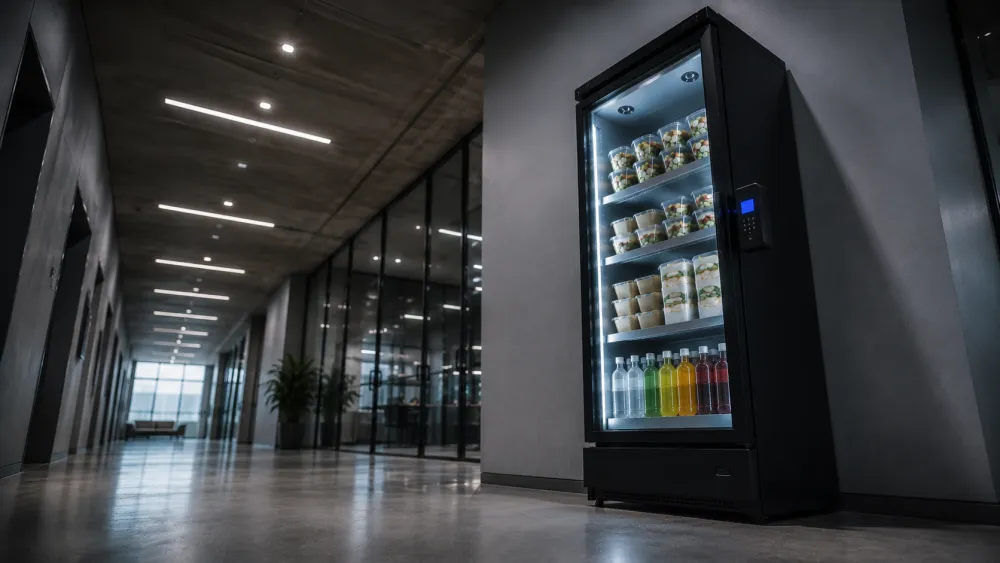
| Chilled smart fridge | Your team or a supplier, during the day | Yes | Only pays off with enough people or hours |
The bottom row is what we make. Bear that in mind as you read.

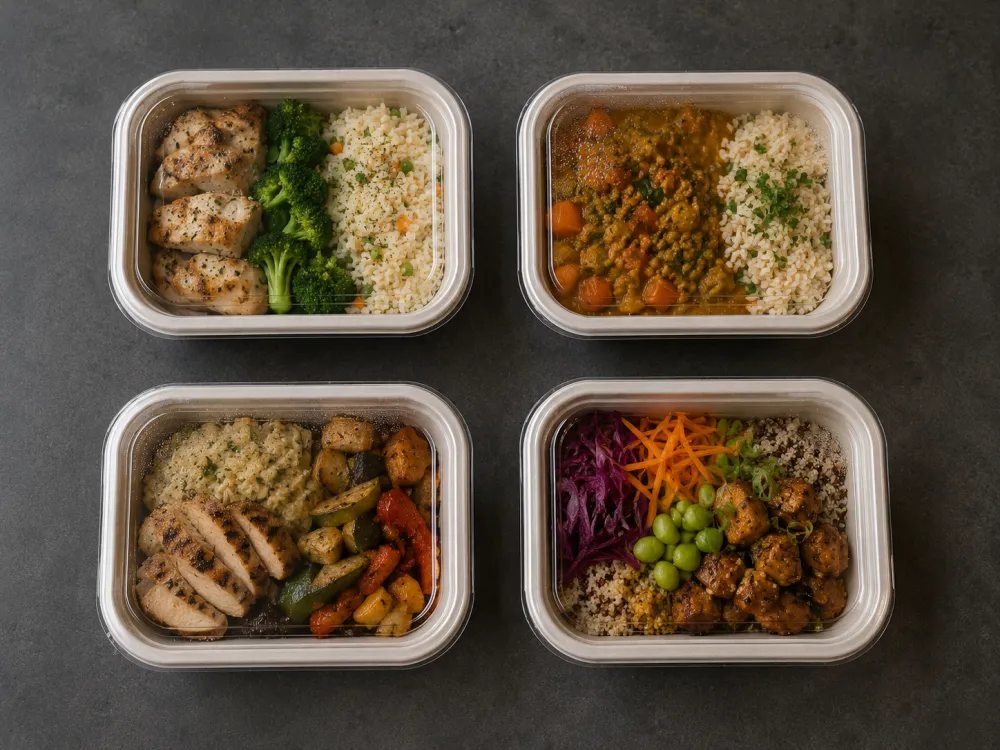
Yoghurt, skyr, ready-to-eat fruit and a roll. What works is covered in healthy snacks at work.
Something high in protein to bridge the first hours of physical work, without sitting heavy.
Water, dairy and juice. The coffee still comes from the machine that is already there.
Looking mainly for sandwiches? Read what a sandwich vending machine does and does not do.

The fridge is restocked during the day, at a time that does not get in the way of work. What the early shift finds at six has been there since the previous afternoon, chilled and with the right date. After a few weeks, the sales per product show what goes in the morning, and the range shifts towards it.
If you want to offer breakfast as a gesture, you can: certain products free, the rest paid for. That is a setting on the fridge, not a separate unit. What the fridge costs depends on your people and hours; see what a smart fridge costs.
Rules on what an employer must provide, such as an eating area or drinking water, differ by country; providing a meal is generally not among them. Check the exact requirements with your health and safety or HR adviser. Employers who do provide breakfast usually do it because otherwise the early shift starts on an empty stomach.
Yes. You can make certain products free, such as yoghurt and fruit, and charge for the rest. That is a setting on the fridge. Put the split in writing before you start.
No, and it does not need to be. It is restocked during the day, so the fridge is full when the early shift arrives. That way nobody has to deal with a delivery at dawn.
Yes, though the effect is smaller. In an office it is mainly about people who start early or come straight from an early appointment. Breakfast is an extra there; lunch remains the main reason for a fridge.
No. A smart fridge is chilled and holds no hot drinks. The coffee machine stays; in the fridge there is water, dairy, juice and iced coffee.
Eight short questions about your shifts and what is open now. We will tell you whether a fridge closes the morning gap for you, and what should go in it.
Takes about 90 seconds · no obligation · no contact details until the last step