A benefit used every day is noticed more than an amount on a payslip. Food at work is like that: everyone sees the cabinet and notices whether there is anything in it. But a well-meant benefit can also go wrong, with a cabinet empty by ten or a scheme that forgets half the shift. Here are the options side by side, with what to check first.
| Option | What it does | Risk | Work for you |
|---|---|---|---|
| Everything free | Lowest possible barrier | Cabinet empties fast, more waste | Keeping track of the budget |
| Certain items free | Water or fruit without a second thought | Low, if the list stays short | Choosing once |
| Subsidy per product or group | Steers towards fresh meals or the night | Making clear what is covered | Agreement at the start |
| Budget per person | A fixed amount for everyone | Anyone without a badge is left out | Linking to the badge |
| Only for one shift | A gesture to nights or weekends | A sense of unfairness | Communication |
How each of these works technically is covered in paying at a smart fridge.
The classic example is making everything free. In the first weeks the cabinet is empty by ten, anyone starting later finds nothing, and more is thrown away than expected. A subsidy per product or a short list of free items keeps the benefit visible without the range disappearing.
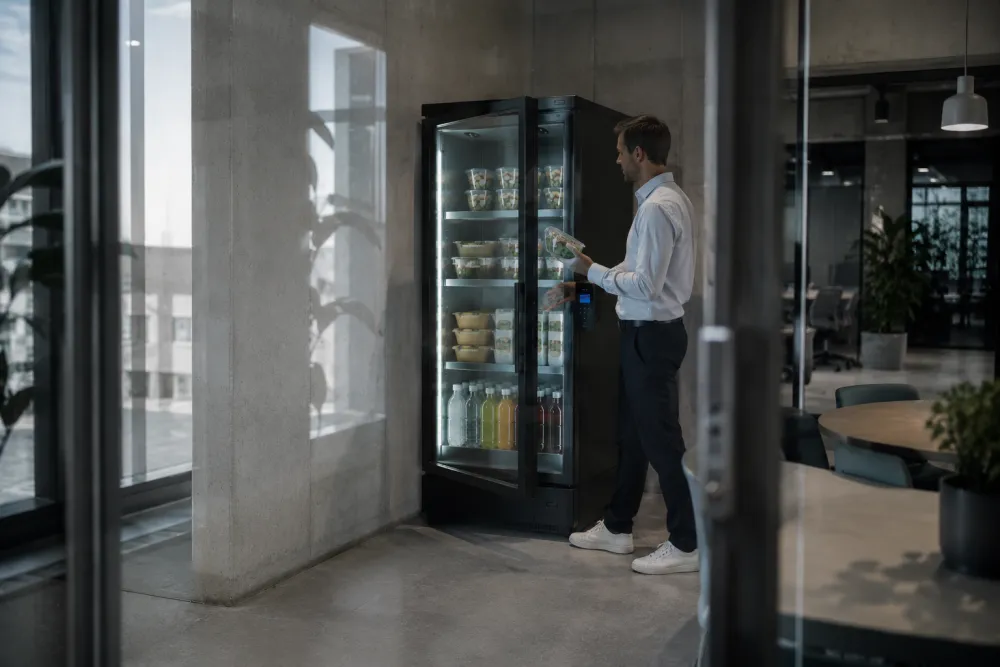
The second pattern is a benefit that only reaches the office team, because it is tied to the canteen. Anyone working nights sees none of it. A cabinet that is open at any hour gives everyone the same, including the shift you see least.

Every benefit has a tax and payroll treatment, which depends on the form, the amounts, your situation and the country. We make no statements about it. Have it checked by your accountant or payroll provider before you set up a subsidy, and take it into your consultation with staff.
Also decide how long the benefit runs and how you will review it. If a subsidy quietly disappears after a year, people mainly remember that it is gone.
What the cabinet gives you is a view of what sells per product. That way you see whether the benefit is being used. Steering towards healthy choices works without banning anything; what works is covered in healthy vending for business.

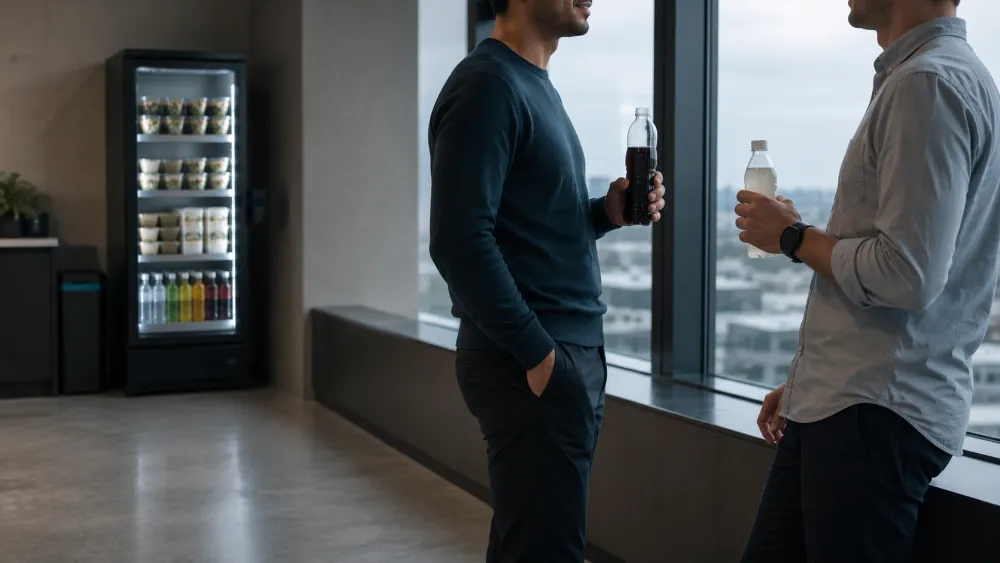
Free water and a few cold drinks is the simplest start. What people drink besides water is covered in healthy drinks at work.
A subsidy only on the night-time meal, for the shift working the least sociable hours.
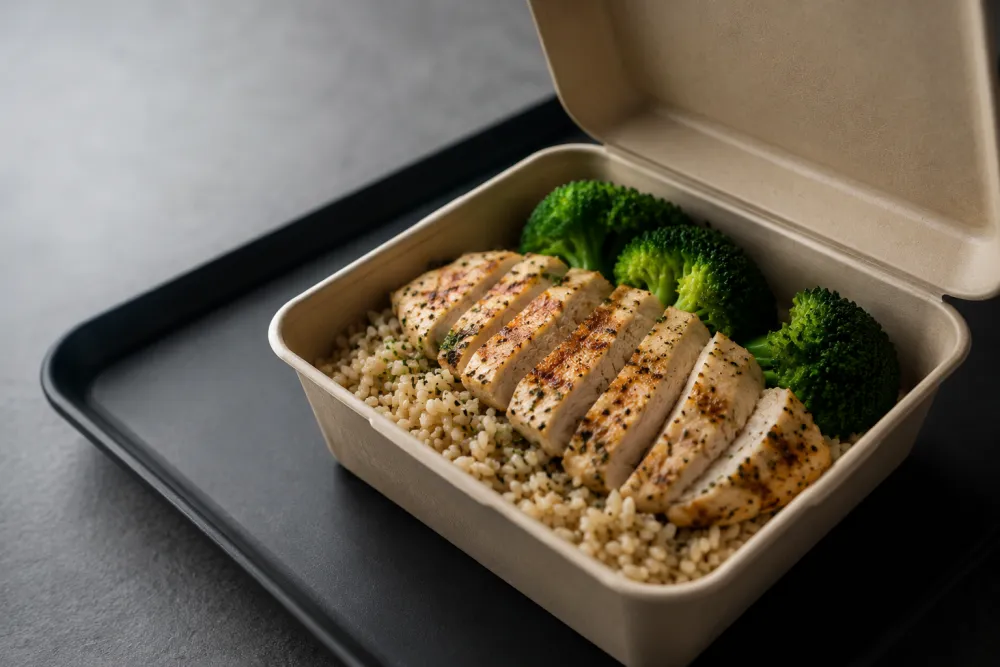
A subsidy on fresh meals makes the healthy choice the cheaper one too.
In the office it is often cold drinks for meetings; see office drinks machine. What the cabinet itself costs is covered in what a smart fridge costs.
That depends on the form, the amounts and the country, and we make no statement about it. Have it checked by your accountant or payroll provider before you commit to anything.
Yes. A subsidy can be set on a product group, for example only fresh meals, fruit or water. That way you steer without banning anything: the classic snacks stay, but are not free.
By not making everything free, or by giving each person a budget. Restocking can also follow what actually sells, but a completely free range is still the one that empties fastest.
Yes, through the badge link. A subsidy only for the night shift is not unusual. Explain clearly why, so it does not feel unfair to those working days.
You see what sells per product. Whether more becomes visible with a budget per person is something to discuss at the start, with your people’s privacy in mind.
Eight short questions about your people and hours. In the conversation we put on paper which form of contribution suits you.
Takes about 90 seconds · no obligation · no contact details until the last step