In a contact centre, the scheduling screen decides when you eat. Every agent gets their own break slot so the lines stay staffed, shifts run into the evening and weekends, and the floor can never empty all at once. An ordinary office with one lunch peak works differently; that is covered under smart fridge for the office.
On an ordinary office floor, everyone eats around midday. In a call centre, breaks are spread so there are always enough people on the phones. Whoever has their break at quarter past eleven has it at quarter past eleven, even if they are not hungry yet. How an ordinary office day runs is covered in smart fridge for the office.
On top of that, a call centre floor cannot empty out at once for a sandwich round or a canteen that opens at twelve. The food has to be ready when the break falls. Half an hour later that agent already has the next customer on the line.
Those breaks are short, and every minute of walking comes off them. What does and does not fit in such a break is covered in short lunch break. Then there are the late and weekend shifts, when the rest of the building is closed; see food for the weekend shift.
| Shift | Break time | What is open now |
|---|---|---|
| Day shift | Spread between eleven and three | Canteen or sandwich shop, if there is time |
| Late shift | Early evening | Usually nothing |
| Weekend | Spread over the day | Little or nothing nearby |
| Peak days | Shortened or moved | Whatever happens to be left |
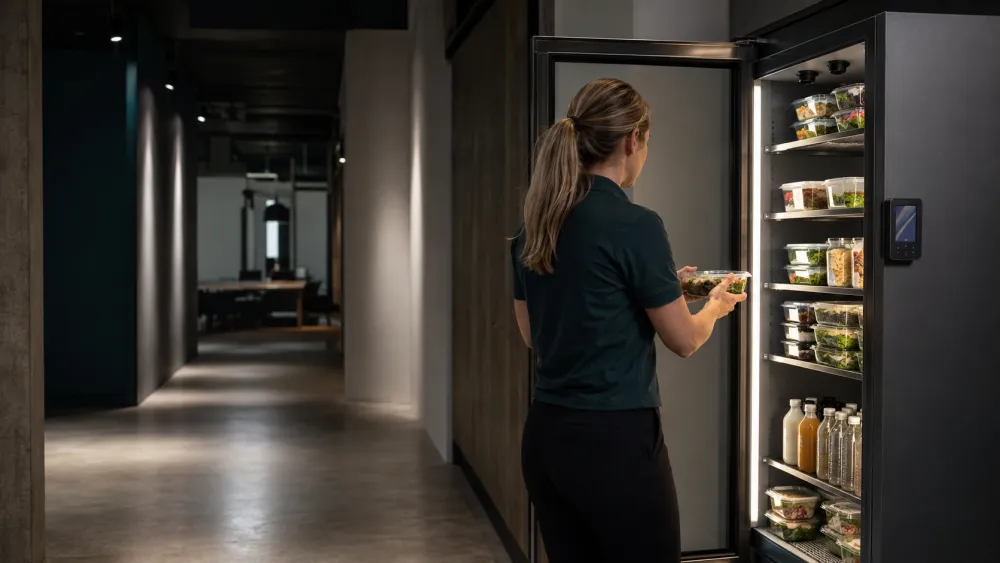
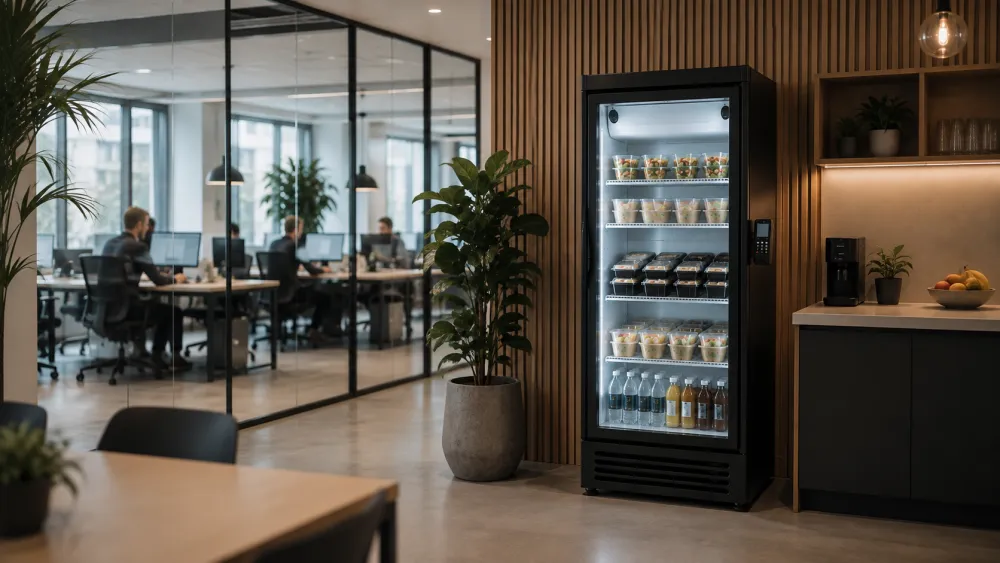
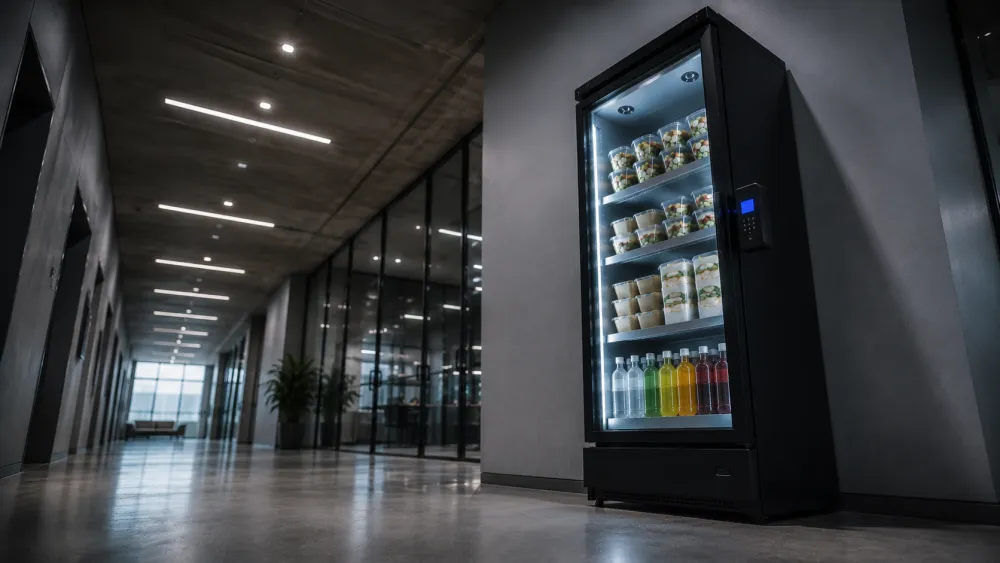
So the cabinet goes as close to the floor as possible, on the way to the break room. Whoever has their break at quarter past eleven chooses in a minute and has the rest to eat.

Every point you tick brings the payback of a cabinet closer. If two or fewer apply, a smaller solution probably fits better, and we will say so.

Anyone going back to hours of calls after the break does not want a heavy meal. For the real break the cabinet holds salads, bowls and a light hot dish, with something small for in between. What works well for that is covered in healthy snacks at work.
Many contact centres use food as a gesture to those on evening or weekend shifts, with a subsidy only for those shifts. How the tax and payroll side works differs by country, so check it with your adviser first.
Staggered breaks mean the cabinet is used throughout the day rather than at one peak. For a cabinet that is more of an advantage. The number of people per day and the hours decide whether it pays off.
On the route between the floor and the break room. Among the desks themselves a cabinet creates foot traffic and noise; too far away it costs walking time.
The cabinet records what sells at which hour. After a few weeks, whoever restocks can adjust the mix so there is something different for the evening than for midday.
Technically yes, with a subsidy linked to the badge that only applies to certain shifts. Explain clearly why, so it does not feel like unequal treatment. Check the tax and payroll treatment with your adviser.
Then less leaves the cabinet and restocking adapts. A planned quieter period, such as summer or a switch to another project, is best flagged in advance to whoever restocks.
Eight short questions about your shifts and breaks. We tell you where a cabinet gives your people back the most break time.
Takes about 90 seconds · no obligation · no contact details until the last step