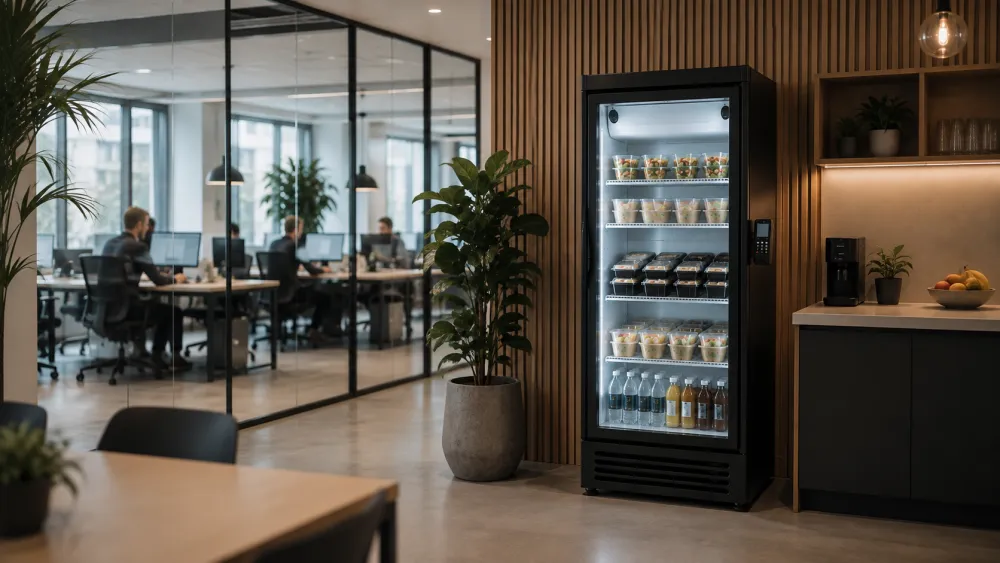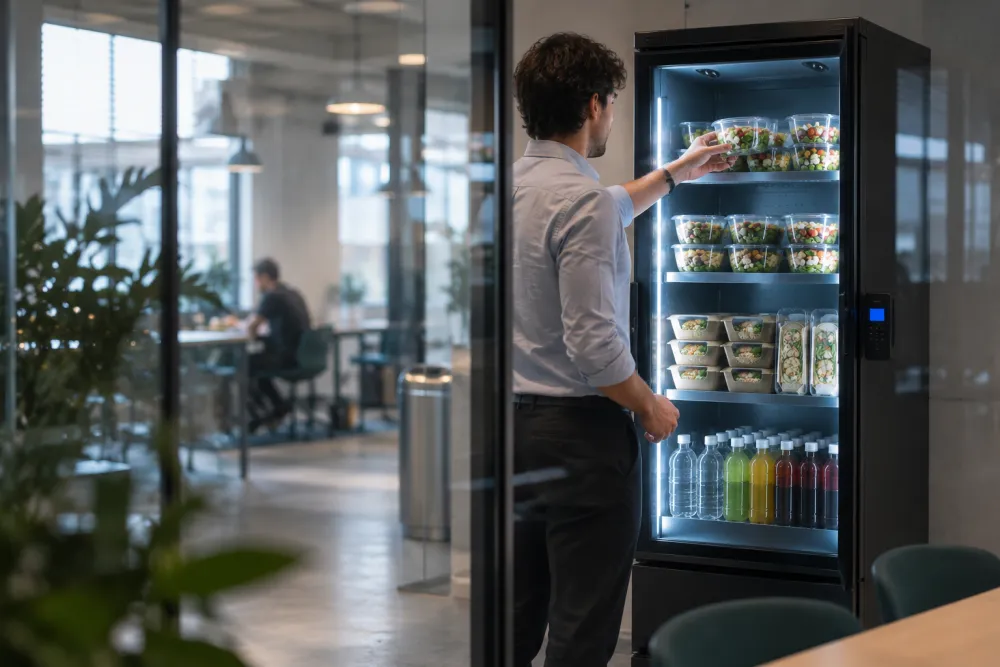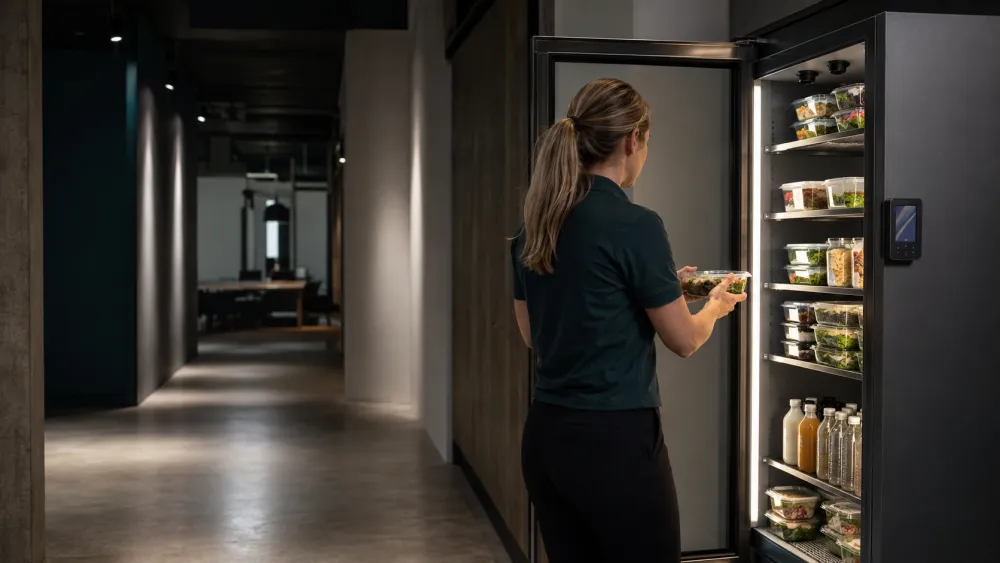
A lunch break that starts with “who’s coming to get something?” costs more time than it seems. With a smart fridge, a proper meal is within reach, even without a canteen or kitchen and without anyone behind a counter.
In most offices, lunch is a habit that quietly costs money. Everyone leaves at the same time, the trip to the sandwich shop takes longer than the break itself, and whoever planned ahead sits with a lukewarm lunchbox in a meeting room. If there is a cafeteria, it closes just as the late meetings start. The fruit bowl or snack drawer meant to fill the gap rarely helps; why is explained under office snacks.
A smart fridge is a chilled cabinet that opens after payment or identification. Inside are real meals, salads, high-protein meal preps and drinks. You do not need to open a canteen: the fridge stands where people work, is always open and needs no staff.

Not every office needs a smart fridge. If you are right next to a high street with ten places to eat, you will probably get little out of it. If you recognise three or more of these points, it gets interesting.
The site check weighs these factors for you. The number of people and the hours count most, because they decide whether a fridge keeps selling in an office.
Fresh meals, salads and sandwiches that carry a whole lunch break, more than a snack.
High-protein meal preps and lighter options, for people who train or would rather not eat out of a packet.
A halal, kosher and vegan range next to the regular one, with soft drinks and water in the same fridge.

An office eats differently from a shop floor. Most of it happens between half past eleven and half past one: anyone without lunch wants something filling within a few minutes. Outside that, use is spread out: breakfast for early starters, something in the afternoon dip, a meal for those who stay late or have an evening meeting.
That shapes how the fridge is filled. For the peak there needs to be enough lunch so the last person in line does not face an empty shelf. For the rest of the day, a smaller, lighter range is enough. Fresh meals with a short shelf life are therefore topped up to the rhythm of lunch, not to a fixed schedule.
The coffee machine stays. For something warm and a short break there is coffee; for water, the tap or the water cooler. What is usually missing is cold drinks and food: a soft drink with lunch, a salad or a meal. That is why the fridge works best next to the coffee corner. People pass by anyway, and anyone getting a coffee sees straight away what is in the fridge. In a side room or a corridor nobody walks through, it stays full.
When an office provides food, the work usually lands on the office manager. A fruit bowl or supply cupboard looks like little effort, until you have to order, unpack and throw away whatever has passed its date every week.
With a fridge you buy, rent or lease, restocking is yours: hand it to a supplier or to one fixed person working from the sales data, so it does not become an extra task. You also choose how people pay: per product, with a budget per employee, or partly free. The payment options are explained separately.
Many smaller offices and business centres have no cafeteria, at most a kitchenette with a microwave. A fridge works then too. The meals go in that microwave and are eaten at a meeting table or in a corner with a few chairs. Seating is up to you, so plan a place to eat, even a small one. More on that situation under business without a canteen.
Eight short questions about your site. We call you back with an honest answer and a proposal for a range that suits your team.
Takes about 90 seconds · no obligation · no contact details until the last step