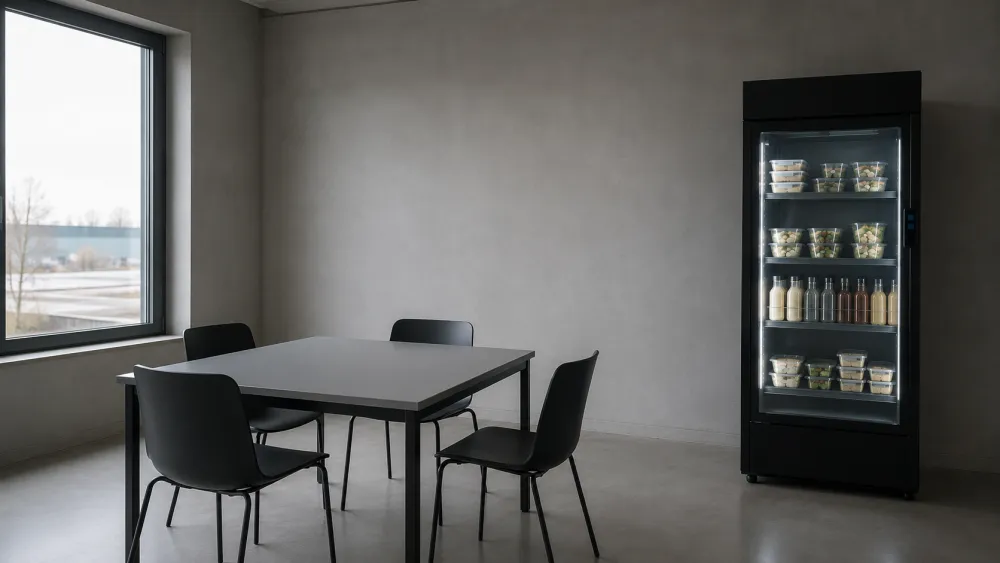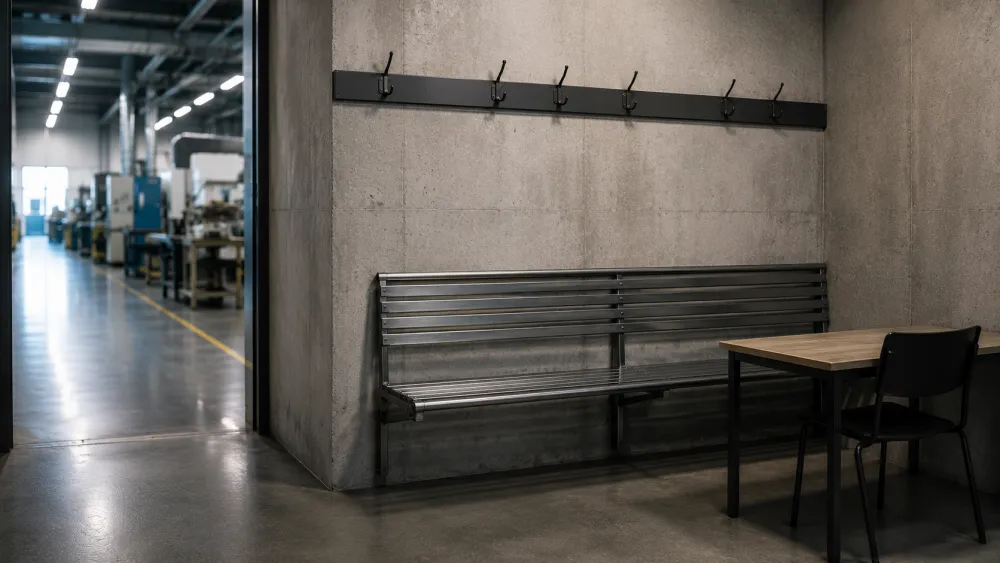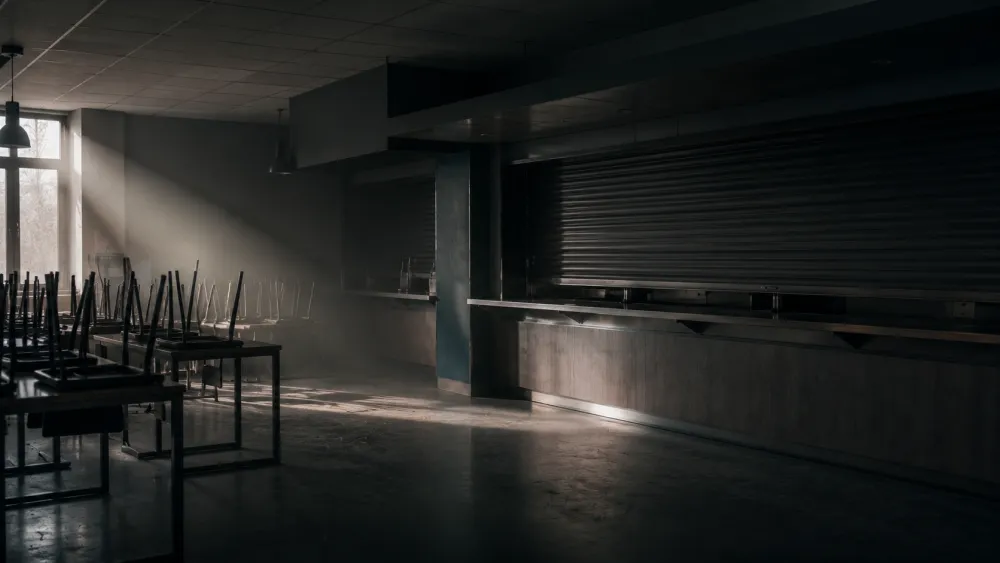
Most businesses never get round to building a canteen, and usually rightly so: a kitchen needs space, staff, fixed opening hours and a level of use you do not reach every day. But in practice “no canteen” often means “no food”, and that is a different decision from the one you made.
Without food on site, the problem shifts: whoever has brought nothing drives off. Work out for your own site how long such a trip takes and how many people make it on an average day. The figure is usually higher than expected, and it appears nowhere in the accounts. Put it next to the cost factors of a smart fridge and you have a fair comparison. Still considering your own kitchen? First look at what a staff restaurant costs.
Then there is what you do not measure: the colleague who skips a meal, the agency worker who does not know the area, and the impression an empty room makes on someone on their first day.
None of the four needs a kitchen. They differ mainly in who carries the work and whether they still mean anything outside office hours.
| Solution | Who does the work | Outside hours | Weak point |
|---|---|---|---|
| Sandwich service | Someone on your side collects and orders | Not available | A daily task that keeps coming back |
| Filling your own fridge | A colleague, on top of their job | As long as something is left | Fizzles out; nobody tracks use-by dates |
| Traditional snack machine | The supplier | Yes, but only dry snacks | Does not replace a meal |
| Smart fridge | Your team or a supplier, guided by the sales data | Yes, at night and weekends too | Only pays off with enough people or hours |
The bottom row is what we make, so weigh it with that in mind. On a small site with a shop round the corner, the most honest advice is often: do nothing extra. And if someone offers to place a machine for free, read what free really means.

Fresh pasta, curries, soups and salads, heated up in the break room you already have.
Meal preps with enough protein for warehouse, production and maintenance work, without the sugar spike and the dip that follows.
So everyone in a mixed shift finds something and half the fridge is not left untouched.

Rules differ from country to country. In many places an employer must provide a suitable place to eat and drinking water once staff eat on site, while a canteen in the sense of a kitchen preparing meals is not required. Have what applies to you confirmed by your health and safety adviser or employment adviser.
Work it out for your own site rather than borrowing a ratio: take the round-trip time plus waiting, multiply by the number of people who do it on an average day, then by the number of working days. On most business parks the trip is closer to half an hour than fifteen minutes, and people rarely go alone. The result is a cost already being paid today without appearing on any invoice.
You can, and on small sites that is often enough. It usually gets stuck on three points: someone has to buy the food, someone has to follow up payments, and nobody removes products that reach their date. With a smart fridge, payment and sales tracking happen automatically; what is left is restocking, which you give to one fixed person or a supplier.
For those who bring their own, yes. You notice the difference with everyone else: new staff, agency workers, technicians on call-outs, and your own people on the days things go wrong. A stocked fridge in that space is then a small step, because you already have the room.
If you buy, rent or lease, you pay for the unit or a monthly fee, plus restocking; employees pay for their own meal, with a subsidy from you if you want. A price list on the website would not match your situation anyway, so we put the figures for your site on paper after the call.
Eight short questions about your site: how many people, which hours, what is there now and what is nearby. We call you back with a proposal that needs no kitchen and no extra staff.
Takes about 90 seconds · no obligation · no contact details until the last step