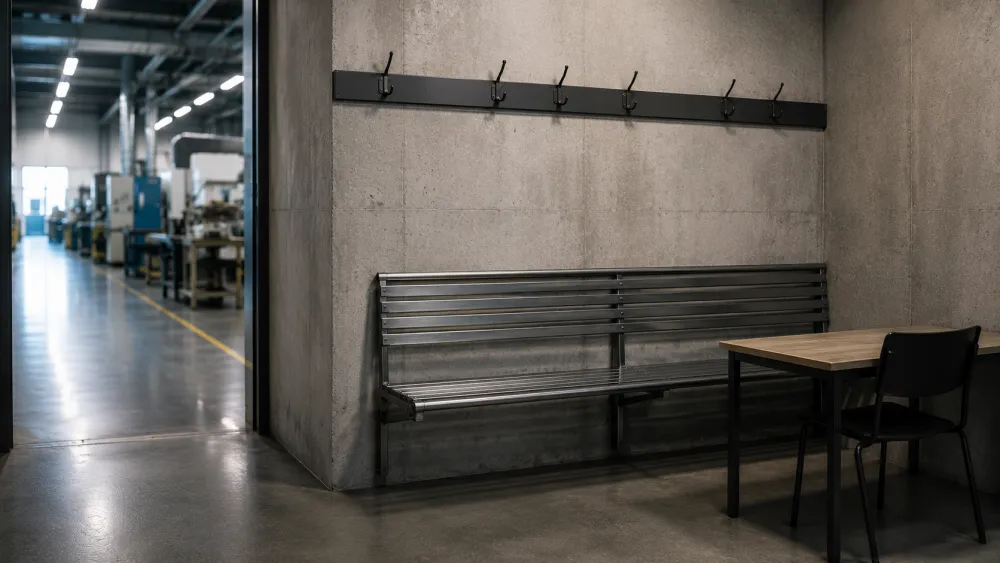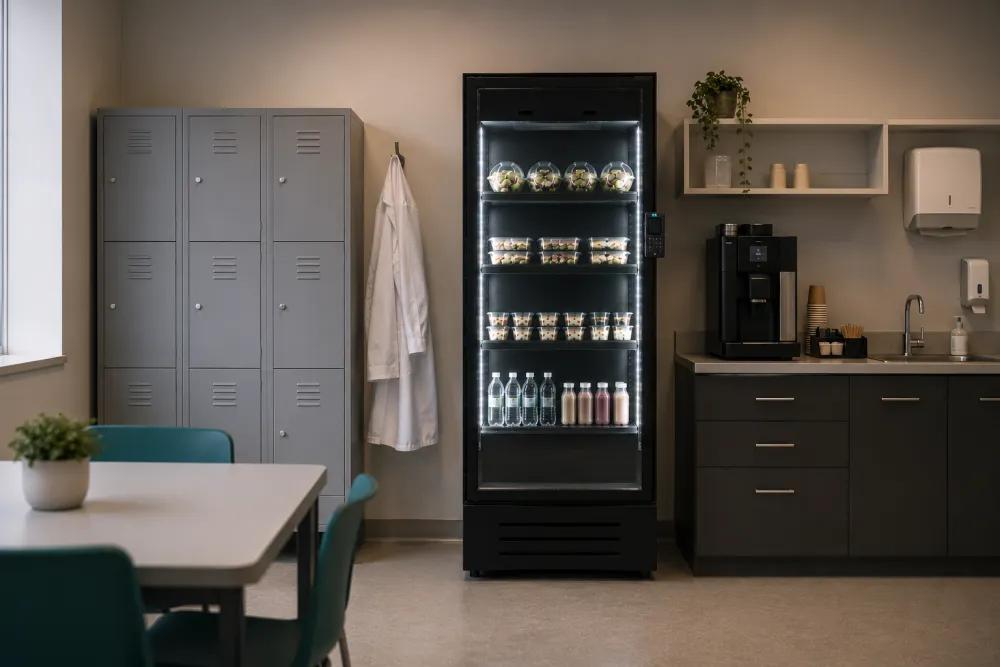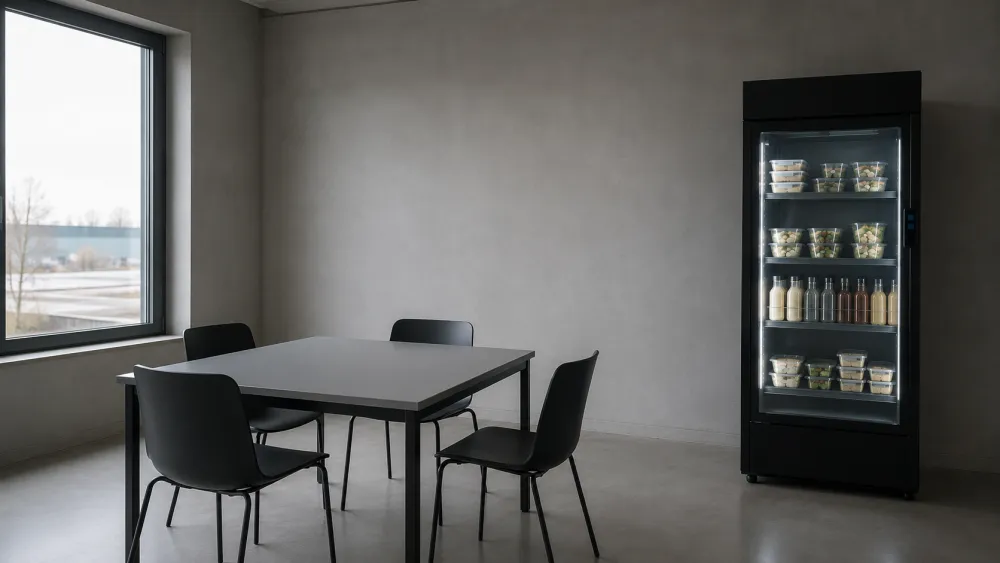
A break room with tables, chairs and a microwave is a place to eat. Whether there is also something to eat is another question, and in many workplaces the answer is: only what people bring. Below: what a break room needs for people to eat there, and what fades after a few months. Then what a stocked fridge adds.
The basics are simple: enough tables and chairs for everyone on break at once, drinking water, somewhere to wash hands, a microwave and a fridge for what people bring. What exactly is required for your site depends on your country; check it with your health and safety adviser. Why an eating area without a kitchen is often perfectly sufficient is covered in a business without a canteen.
What the basics do not solve is the day someone has brought nothing. A new colleague, a cover worker, a double shift. Then the break room is there, with a microwave and nothing to put in it.
| Who looks after it | What is missing after a while | |
|---|---|---|
| Shared fridge | Everyone, so nobody | Someone to throw out expired tubs |
| Snack cupboard | A colleague, on top of their job | Someone to restock and settle up |
| Microwave with no food | The team | Something to heat up |
| Stocked smart fridge | Whoever restocks, guided by sales data | Little: dates are checked at every restock |
The last row describes our own model, so weigh it accordingly.

On the way to the tables, not in a corner behind the door. More in technical requirements.
An ordinary socket is enough. No water, drain or kitchen needed.
In care or manufacturing, sometimes the staff room or changing room rather than the break room.
In a care facility, infection control decides where the fridge may stand; see a smart fridge for care facilities.

A break room gets used if it is close, light and clean. A room next to the warehouse with a strip light and a table full of old newspapers says something different from a place where people want to spend their break. It costs little: a spot on the route, enough chairs for the busiest break and someone who wipes the tables every day.
Once those basics are in place, you notice the difference as soon as there is something to eat too. People stay on site and no longer drive off during their break.
You already have the space; what is added is the food. What the fridge costs is covered in what a smart fridge costs.
Many countries have rules on a suitable place to eat and on drinking water, but what they mean for your site varies by country, sector and situation. Check it with your health and safety adviser.
That depends on how many people take their break at once and how many of them eat hot. In a shared break, one microwave quickly falls short. We are happy to think it through with you when planning the installation.
Yes. People who bring their own food need it. The smart fridge is for anyone who has brought nothing, or would rather buy something. Both side by side is the normal situation.
The break room remains your space and your responsibility. The fridge itself, restocking and removing anything near its date belong with whoever restocks it: your team or your supplier.
Sometimes that is even better, for example where the break room is far away or people take something for the road. What matters is that the spot is on a route everyone passes.
Eight short questions about your space, your people and your hours. We will tell you whether a fridge really turns your break room into a place to eat.
Takes about 90 seconds · no obligation · no contact details until the last step