A drive to the sandwich shop, a queue at the counter and then actually eating: that does not fit into thirty minutes. Something always gives, and usually it is the food. Whoever comes back with a sandwich in hand eats at their desk or their machine. Below: where the minutes of a short break go, and what does fit inside it.
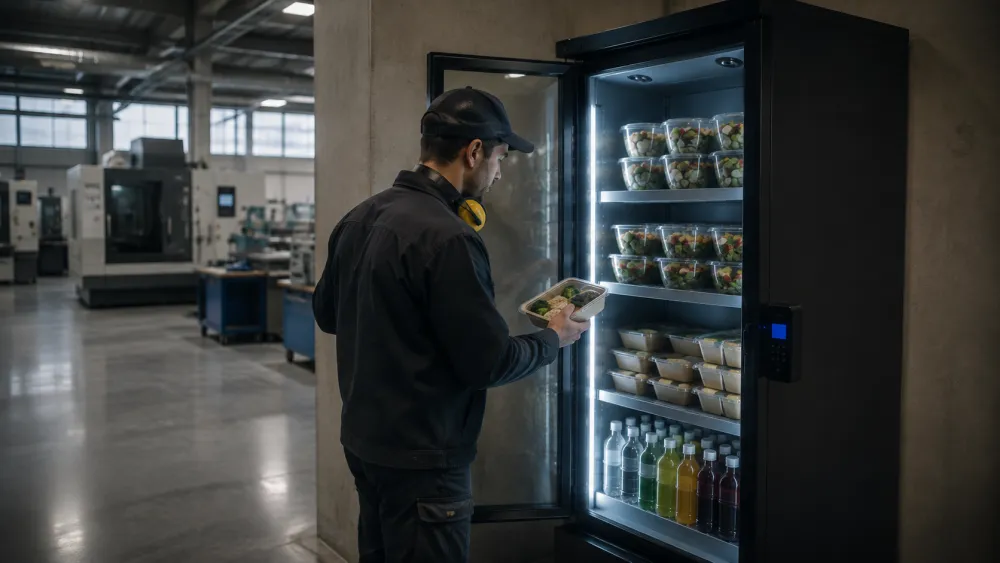
Before anyone sits down, they have walked to the break room, chosen or waited, and heated their food. On a large site or a floor far from the break room, half the break has gone before anyone eats. In manufacturing the break is also shared and fixed; see a smart fridge for manufacturing.
A short break is mainly a question of distance. What is ten metres from the workstation gets eaten; what is five minutes away gets skipped or wolfed down.
Anyone eating hot also waits at the microwave. In a break where everyone eats at once, that becomes a queue. How to limit it is covered in hot meals at work.
| Approach | Where the time goes | Do people really eat | Weak point |
|---|---|---|---|
| Driving out | Driving and parking | In the car | Barely fits |
| Sandwich service | Ordering and collecting | Yes, if someone ordered | Whoever forgot has nothing |
| Canteen with a queue | Queuing | Yes | With a shared break, the queue is long |
| Fridge on the walking route | A minute to choose | Yes | Needs a spot on the route |
The bottom row is what we make, so read it with that in mind. The location matters more than the unit: a fridge in a side room costs the same walk as the break room. What makes a good spot is covered in technical requirements.

In a call centre, breaks are scheduled per employee; every minute of walking is one less at the table. See a smart fridge for a call centre.

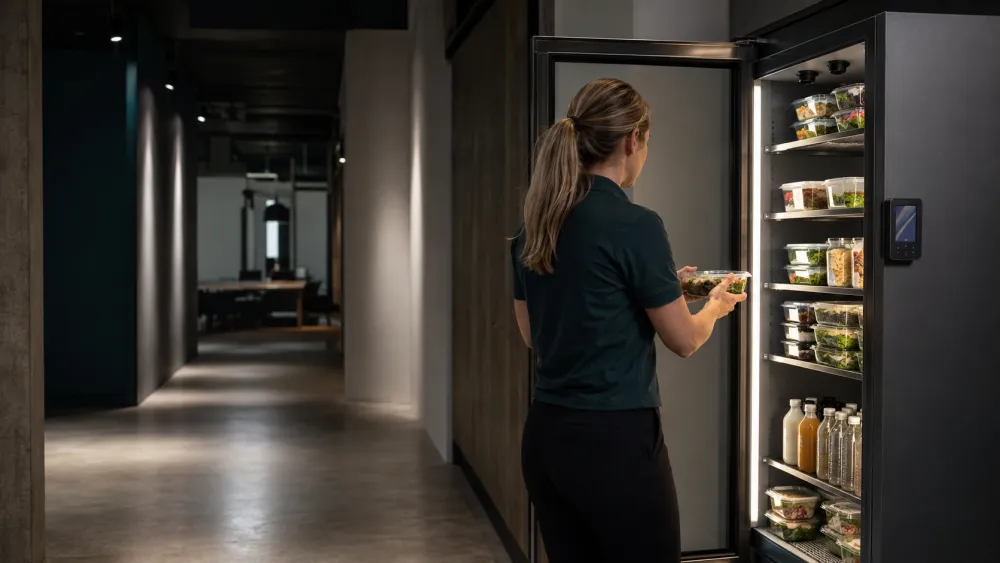
What works in a short break is food that is already waiting on the route to the break room: choosing without a queue and, for anyone who wants it hot, a meal that heats in a few minutes. The more microwaves there are in a shared break, the less waiting.
Where you can, stagger the breaks themselves too: two groups taking their break ten minutes apart halve the queue at the fridge and the microwave. It costs nothing, and it makes more difference than an extra unit.
What such a fridge costs depends on how many people take a break and at what times. The factors are in what a smart fridge costs.
That depends on your country, sector, the length of the working day and your employment terms. Check it with your HR or employment adviser. For eating, what matters most is how much of that break is actually left to eat.
Rarely. In a shared break, a queue forms quickly. A second microwave is often the cheapest improvement, and keeping part of the range cold helps too. We are happy to think this through with you when planning the installation.
On the way to the break room, not behind it. Anyone who passes the fridge on the way to their seat loses no time. On a large site, that can mean one fridge per hall.
Sometimes, and that is your call as an employer. The fridge only decides what there is to eat. Add a place to sit down for a moment, and the break feels like a break too.
Yes, the difference is even bigger there. A fridge is open whenever the break falls, even if that changes every day. A sandwich service or canteen works to fixed hours.
Eight short questions about your breaks, shifts and break room. We will tell you where a fridge wins back the most minutes for you.
Takes about 90 seconds · no obligation · no contact details until the last step