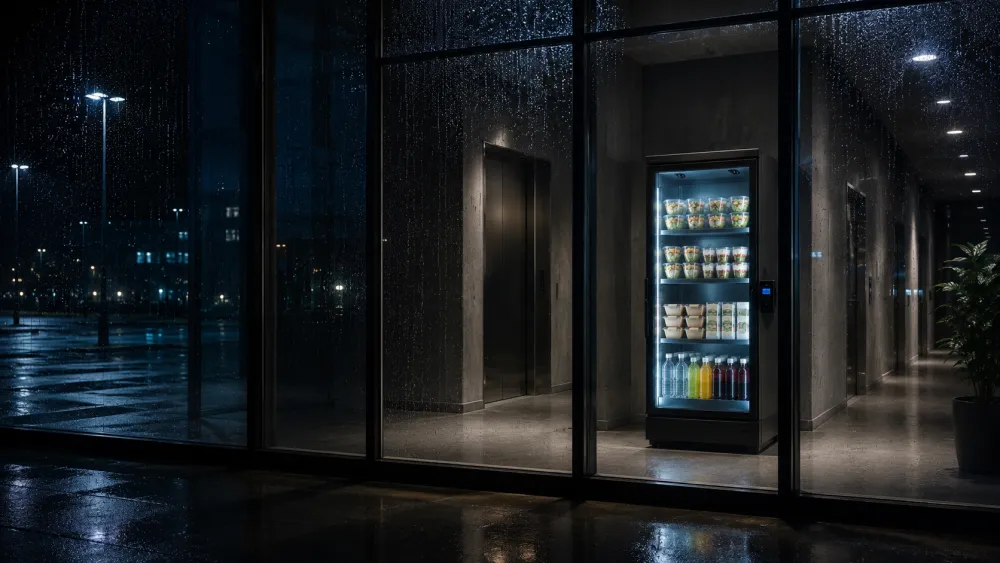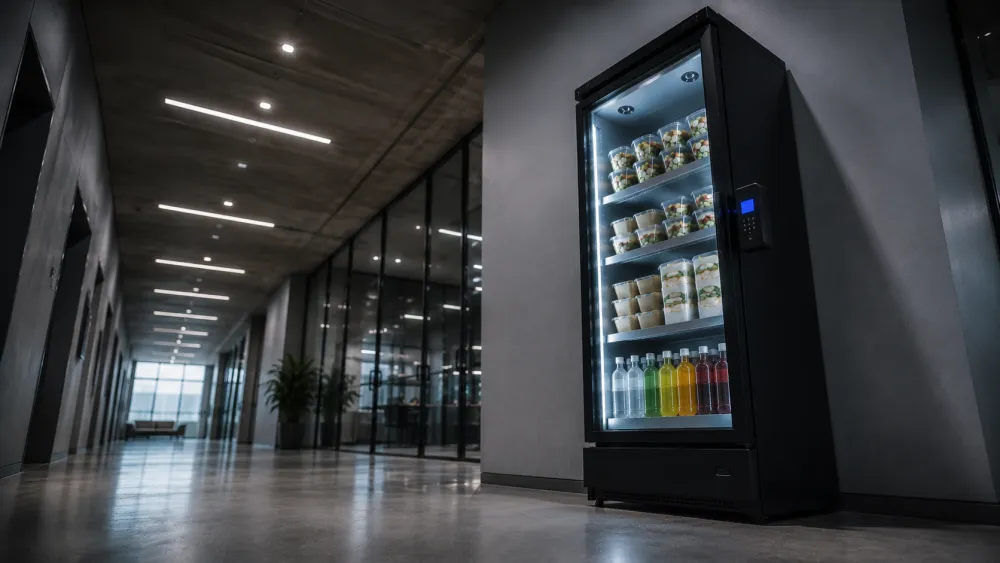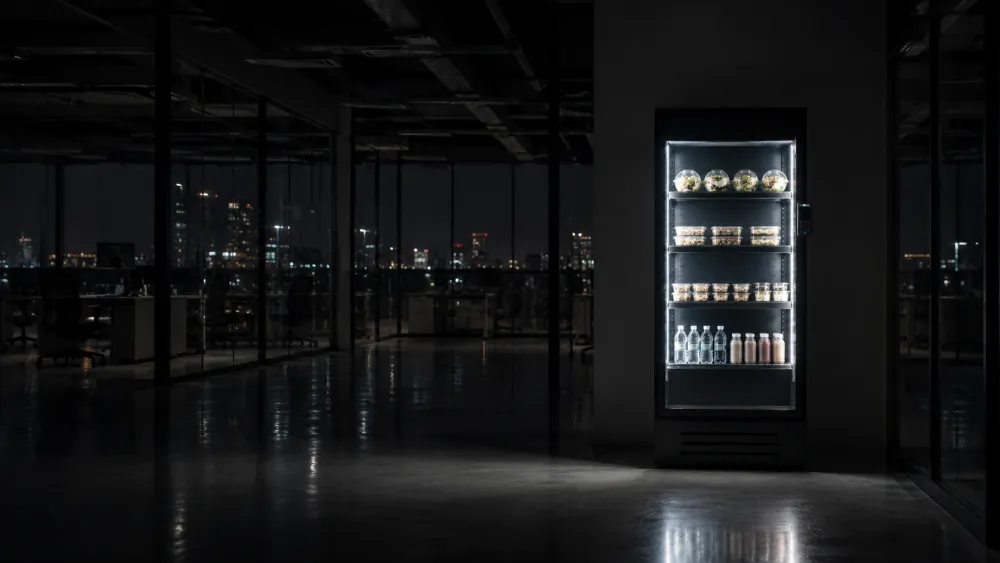
On most sites that run day and night, food is only arranged for the daytime. The canteen closes at two, the sandwich service comes once, and whoever starts at eleven at night finds a machine full of crisps. The bottleneck is the hours: the food offer covers only a third of the time people are on site.
Put your staffing and your food offer on the same timeline. At most continuous operations, something is available from seven until two, and the rest of the day, the night, the weekend and public holidays fall outside it. Those are exactly the times nothing is open nearby either.
Whoever works those hours brings everything themselves or does not eat. That usually goes fine, until a shift is extended, someone has to cover, or it turns into another long night.
A round-the-clock food point pays for itself on sites with lots of people or long hours. These signals weigh most. The more of them apply to you, the clearer the answer. The factors behind the cost are covered under the price of a smart fridge.
If only nights run at your site and not weekends, look specifically at feeding night shift workers, which covers how to organise it in practice. A fridge also covers periods when mealtimes shift, such as Ramadan.

Which shifts run, when do they change, and at what times is there nothing now? Spot, range and rhythm follow from that.
A place every shift passes and that is accessible at night too, without anyone having to unlock a door.
What nights take is not what the early shift takes. The fridge is set up for both, not for an average.
After a few weeks, sales show hour by hour what is going, and the range and restocking rhythm shift towards it.

By keeping the food on site, so nothing has to be delivered at the moment it is needed. A smart fridge with fresh meals, snacks and drinks is there at three in the morning, at weekends and on public holidays too. People pay by bank card or app, so nobody has to stand behind a counter and there is no till to open.
Yes, provided the fridge stays chilled and use-by dates are monitored. That is why restocking cannot be a side job: products reaching their date must come out before someone finds them at four in the morning. Give that task to one fixed person or put it in writing with your supplier.
For ten people alone, usually not. But a 24/7 site rarely has only a night shift: add the early shift, the late shift, weekends and visitors and you are usually well above the number present at any one time. That is why the site check asks about the hours and the total number of people on site each day.
You can, but you do not have to. On sites with lots of outsiders (drivers, technicians, agency staff) you usually want everyone to have access. If you do want to restrict it, access can be linked to a badge or code instead of open payment.
Then the restocking rhythm is off. Sales per time of day show what actually goes; range and frequency are adjusted to that. In practice it shifts after a few weeks: night shifts take different products from the early shift, and the fridge is set up accordingly.
Eight short questions about your shifts, your staffing and what is there now. We call you back and tell you at which hours it pinches, and whether a round-the-clock food point solves it.
Takes about 90 seconds · no obligation · no contact details until the last step