During Ramadan, people who fast eat before dawn and after sunset. Exactly the hours when the canteen and the sandwich shop are closed. What we do and do not guarantee about halal is under halal vending. This page covers the practical side: what needs to be available at those hours and how to arrange it without making it a separate project.
For people who fast, the meal falls outside the usual break during this period. Someone on a late shift needs to be able to eat at sunset, even if that is mid-shift. Someone who starts early eats before it gets light. For a canteen or sandwich service, those are impossible hours.
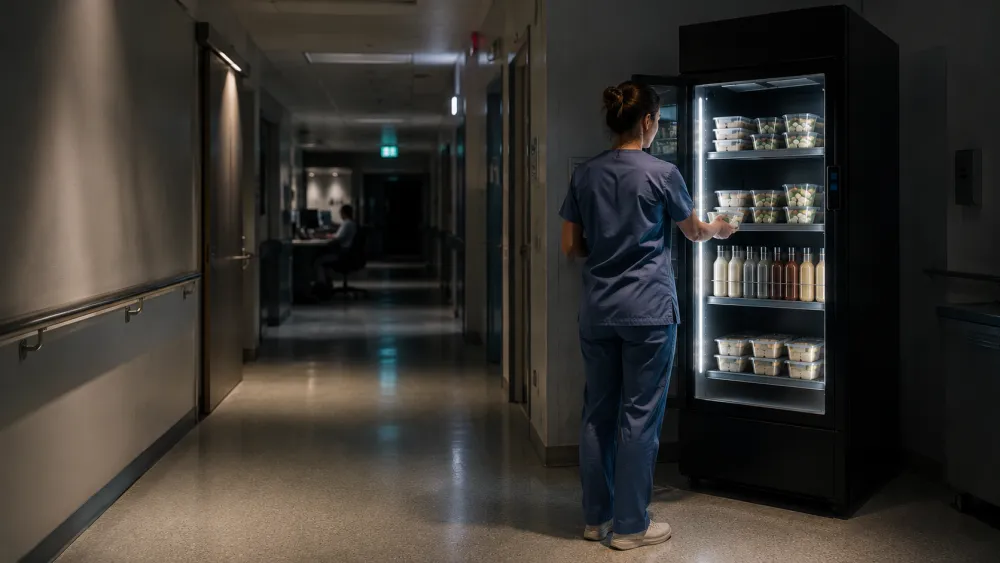
On sites that run day and night, a fridge that is always open is often the only food on site during this period; see 24/7 food at work. On logistics sites with many external staff, it also matters for people who are not on your payroll; see smart fridge for logistics.
A fridge without opening hours, so there is something at sunset, even at night.
A mix adjusted for those weeks, with portions that work at those hours.
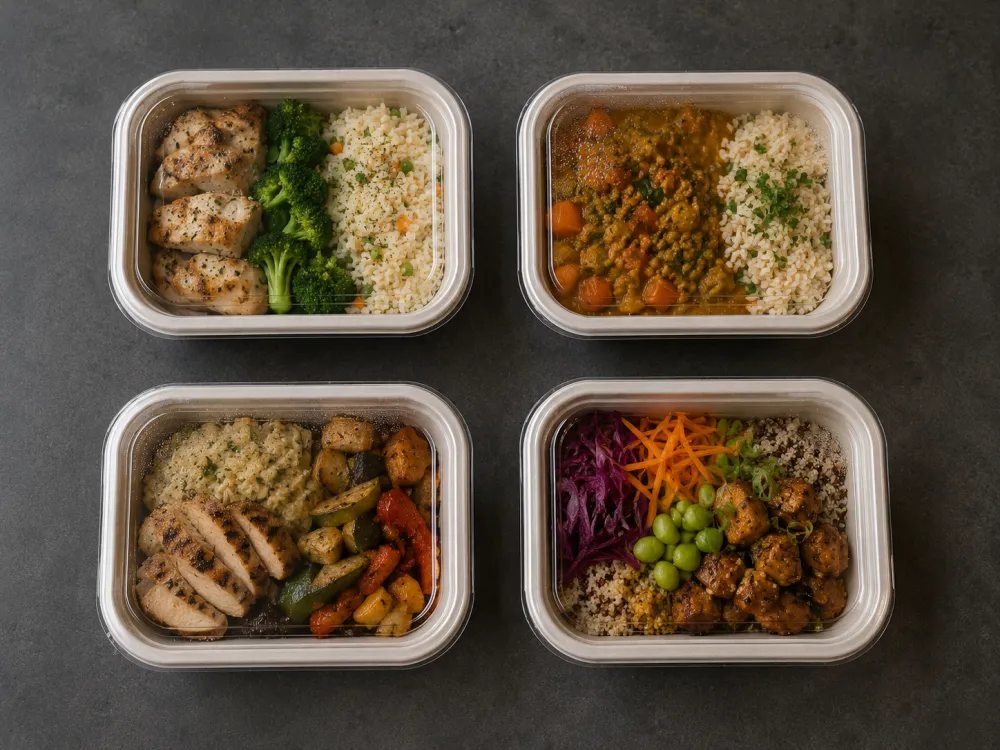
Halal labelled by the producer on the pack itself, so nobody has to ask.
Water, dairy, fruit and something small to start with.
What the night asks of the menu is also covered in meals for the night shift.

| What it covers | |
|---|---|
| The fridge | Open at any hour, products labelled, sales per product visible |
| Whoever restocks | Your team, your caterer or a local supplier: adjusting the mix and quantities for that period, and offering recognisably halal products |
| What we do not do | Make statements about religious rules, or decide who eats what |
| What you arrange | Agreements on breaks and hours with your team, and any changes to the schedule |
How the halal range is defined and which certificates producers can show is covered under halal vending.

Water, dairy, fruit and something small for the moment the fast ends.
Halal dishes to heat up, in portions that are realistic at that hour.
Something that can be eaten quickly before dawn, for early starters.
What exactly goes into that mix is agreed in advance with whoever restocks. We do not give nutrition or health advice. Nutritional values and allergens are on every pack; for individual questions, a dietitian or your occupational health doctor is the right person to ask.
Most of the work is done once there is a fridge that is open day and night and offers recognisably halal food. Ramadan then mainly needs a heads-up in advance, so the mix and quantities can be adjusted for those weeks and set back afterwards. The sales per product show what is going.
Colleagues who are not fasting notice little difference. The cost of the fridge depends on your people and hours over the whole year, and those few weeks do not change it; see what a smart fridge costs.
We make no statement on that. What is possible or needed is something to discuss with your team, and if in doubt, check with your HR or employment adviser. Our part is that the fridge makes food available at the hours it is needed.
No. Whoever restocks adjusts the mix and quantities for those weeks and sets them back afterwards. Plan it in advance with them.
No. Even for a smaller group, it makes a difference whether there is something at sunset. A fridge that is already open at every hour needs little extra for it.
Little changes for them. The usual range stays, and something is added for the hours when it is needed.
Yes. The adjusted mix applies to that period. After that, the range is steered again by what usually sells.
Eight short questions about your site and your shifts. In the conversation we look at what is needed in those weeks.
Takes about 90 seconds · no obligation · no contact details until the last step