A delivery at half past eleven suits anyone who eats at twelve. Anyone taking a break at three in the morning gets nothing from it. Companies that have meals delivered choose between two models: ordered and delivered every day, or kept chilled in stock on a fixed rhythm. Here they are side by side. How meal preps reach your people in the second model is covered in meal prep for business.
With daily delivery, someone on your side orders what is needed every day, and the food arrives at a fixed time. That works for an office with predictable attendance and one lunchtime. It does need a daily order and someone to receive the delivery. Where it fits among the options is covered in food for staff.
With delivery to stock, the food arrives chilled, on a fixed rhythm, in a fridge on site. Nobody has to order each day. People choose at any hour from whatever is in the fridge. How that works for meal preps is covered in meal prep for business.
| Daily delivery | Lunchbox subscription | Stocked fridge, restocked by your supplier | |
|---|---|---|---|
| Who orders | You, every day | The employee | You or the supplier, based on sales |
| Delivery time | Fixed, usually before lunch | Fixed | On an agreed rhythm |
| Leftovers | Yours | The employee’s | Whoever buys the stock |
| Out of hours | No | No | Yes |
Already have a fridge or vending machine and only need the food? See restocking your fridge or vending machine.

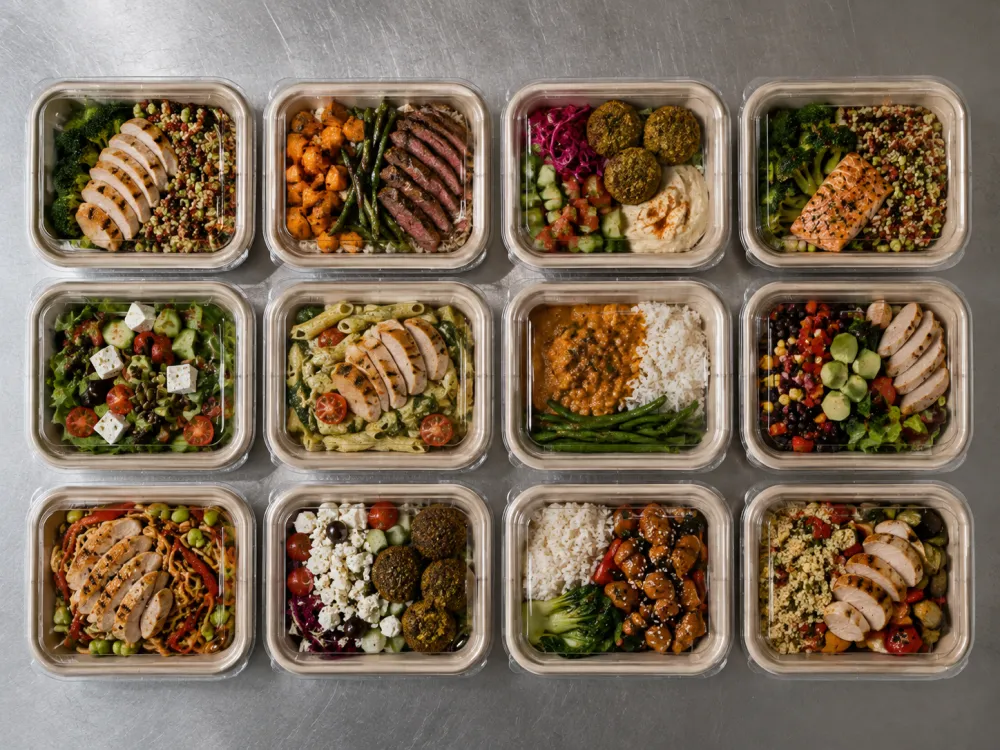
Dishes to reheat, salads and bowls, with the date on the pack.
Meal preps for people doing physical work, and smaller portions for in between.
Included and clearly labelled, so the whole team can choose.

Meals are prepared and packed with the date, nutrition and allergens.
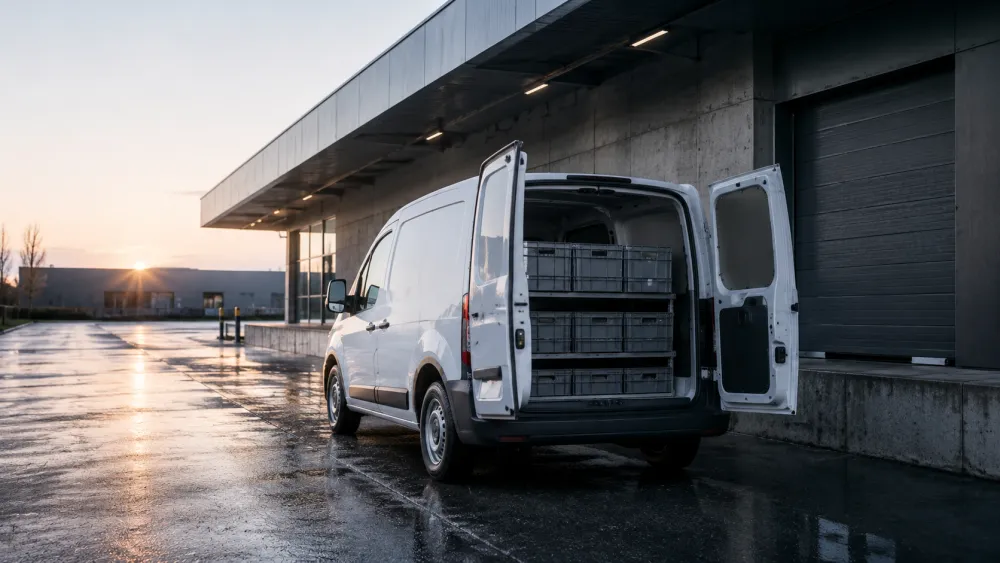
From the kitchen to your site without a break in the cold chain.
The fridge is filled, dates are checked, and anything that has to come out is taken away.
What sits does not come back next time; what sells gets more space.
In an office with one lunchtime and fixed days, daily delivery can work well; the fridge is then mainly there for the hours around it. On a shop floor with shifts it is the other way round: a delivery before lunch misses the night and the weekend entirely. How a night shift is organised is covered in feeding night shift workers; for offices see office smart fridge.
What a stocked fridge costs depends on your people, hours and the share of fresh food; see what a smart fridge costs.
Not with a smart fridge. Everyone chooses from the range in the fridge. What actually sells decides what is in it next time.
That depends on how many people pass each day and on the share of fresh meals. The rhythm is set per site and adjusted to consumption.
Not necessarily. Whoever restocks can fill the fridge directly, check the dates and take away what has to come out, provided access to the spot is arranged. Nobody else needs to be there.
Yes. Some offices keep an ordered lunch on team days and use the fridge for the other days and the hours around lunchtime.
Then the fridge empties faster than usual, and that shows at the next restock. If you know about a busy day in advance, such as a training day or an open day, let whoever restocks know so they can plan for it.
Eight short questions about your site and your hours. We will tell you whether daily delivery or a chilled stock suits you better.
Takes about 90 seconds · no obligation · no contact details until the last step