A water cooler and a coffee machine are usually there already. What many workplaces lack is something cold that is not a soft drink: a dairy drink after a heavy morning, a bottle of water to take onto the floor, something to go with lunch. Below: what people actually drink, what you can offer free, and where cold drinks are best placed.
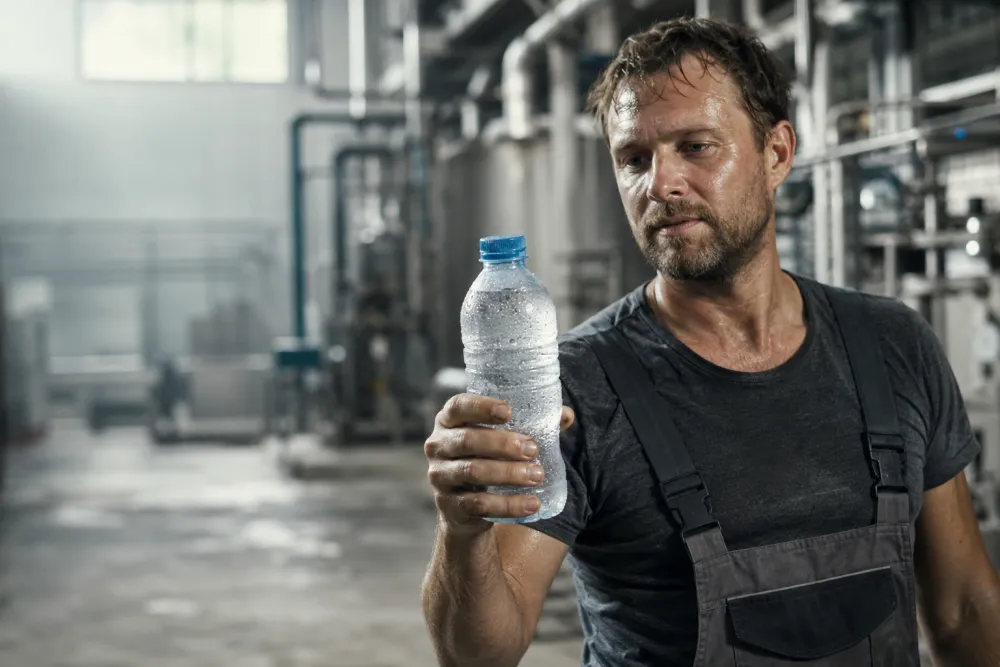
What people drink depends on what they do. Physical work and warm spaces push water consumption up, shift work spreads it around the clock, and in an office it is mostly about something cold at lunch or in a meeting. What a separate drinks machine does and does not solve is covered in drinks vending for businesses.
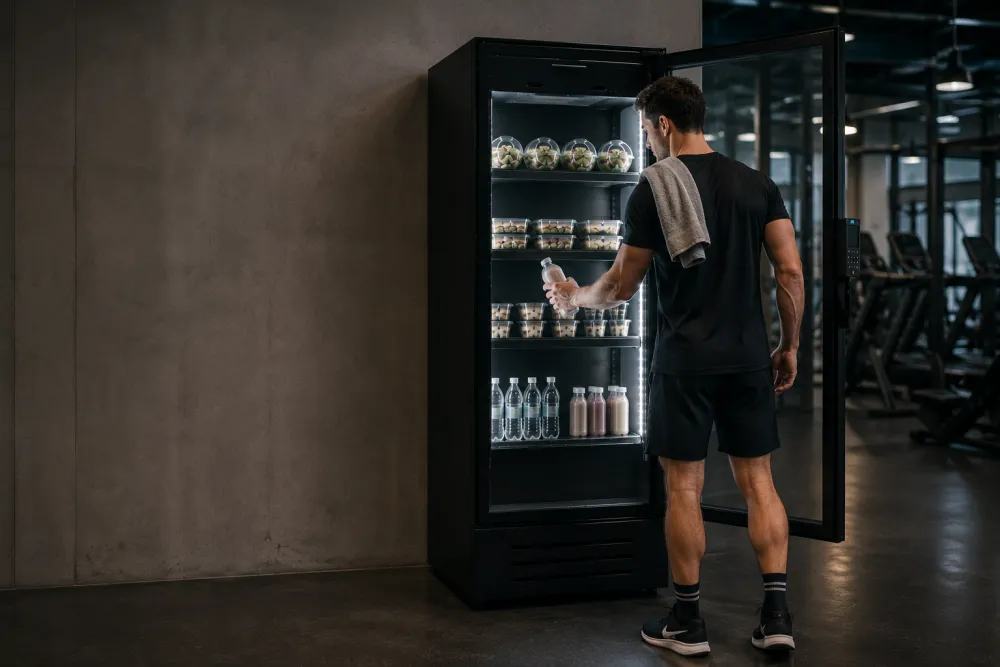
In a sports club there is one more moment: after training, when someone wants more than water. How clubs handle it is covered in a smart fridge for a gym.
| Tap or water cooler | Drinks machine | Chilled fridge with drinks and food | |
|---|---|---|---|
| Free possible | Yes | Rarely | Yes, set per product |
| Cold | Yes, water | Yes | Yes |
| Choice besides water | No | Soft drinks, sometimes water | Water, dairy, iced tea, sports and protein drinks, soft drinks |
| Something to eat too | No | No | Yes |
The right-hand column is what we make, so weigh it with that in mind. For water alone, a tap point is hard to beat; what an office needs alongside coffee and tap is covered in drinks vending for the office.

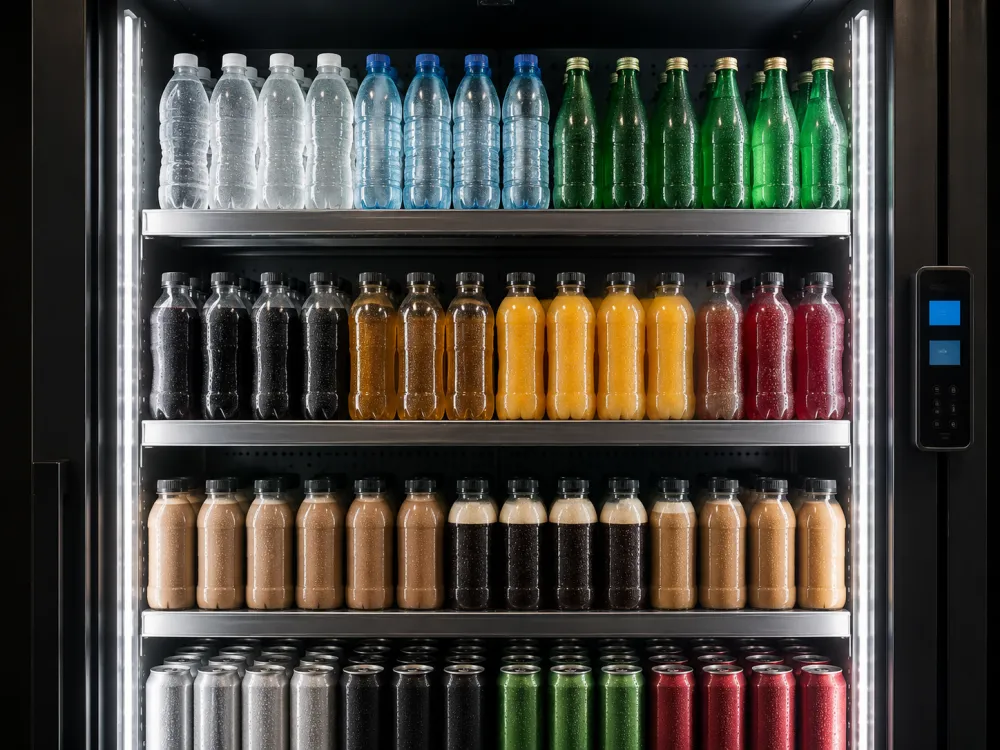
Still and sparkling, in bottles that can go onto the floor or into a meeting.
Dairy drinks, smoothies and iced tea for anyone who wants something other than water.
Sports and protein drinks for people who do physical work or train. More in high-protein meals.
Soft drinks and iced coffee sit alongside. Hot coffee is not in the fridge; your coffee machine stays for that. We do not give nutrition or health advice. Nutrition and allergens are on every pack; for individual questions, a dietitian or your occupational health doctor is the right place to go.

In an office people come there anyway, so cold and hot sit together.
Grabbing a bottle at the start of a shift, without a detour.
Cold bottles for a meeting, from the fridge instead of a lukewarm store cupboard.
In a club, where people pass after training.
Rules on providing drinking water at work exist in most countries, but the details vary; check what applies to your site with your health and safety adviser. A comparison of the different ways to provide food and drink is in food for staff.
On the fridge you can make bottled water free and charge for the rest, or subsidise certain drinks. That is a different setting on the fridge; a second unit is not needed. What the fridge costs is covered in what a smart fridge costs.
Most countries have rules on drinking water at work, but how they apply to your site varies; check it with your health and safety adviser. A tap or water cooler is often enough; the fridge is an addition.
Yes. That is a setting on the fridge. You choose which products are free, and the rest is paid per item by bank card, app or badge.
Iced coffee yes, hot coffee no. A smart fridge is chilled; your coffee machine stays, and the fridge adds the cold options that are missing.
By agreeing the ratio and adjusting to what sells. Banning soft drinks rarely works; water and dairy at eye level, possibly with a subsidy, work better.
That varies too much to put a number on. Physical work, heat and shifts push consumption up. After a few weeks, sales per product show what goes at your site, and the mix is tuned to that.
Eight short questions about your site. We will suggest a drinks range that fits the work being done there.
Takes about 90 seconds · no obligation · no contact details until the last step