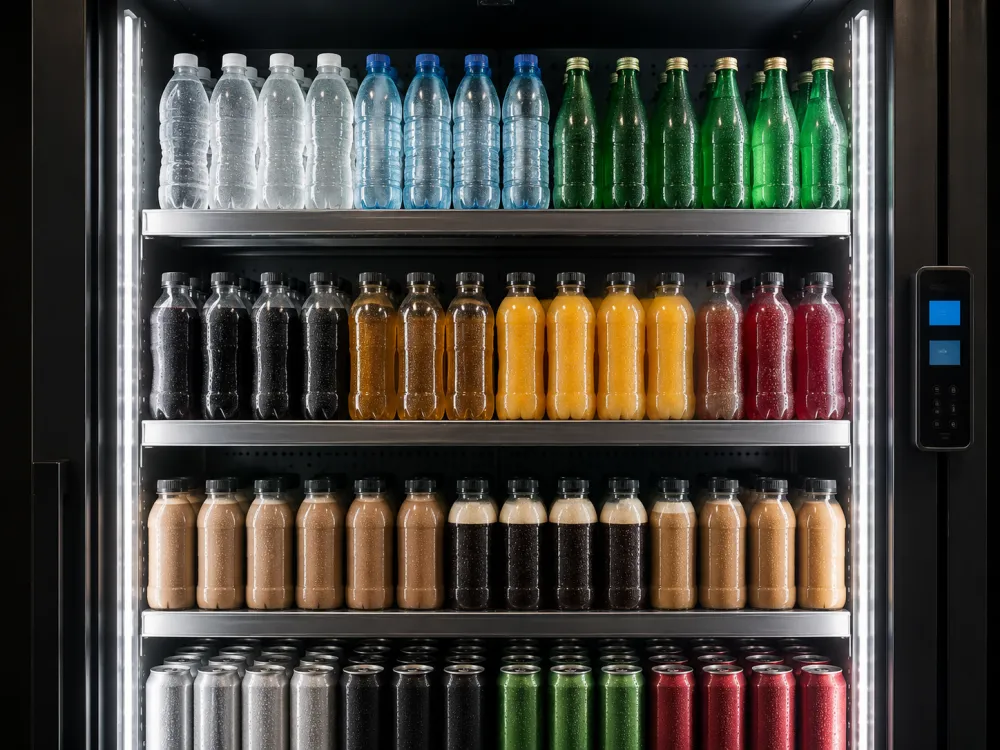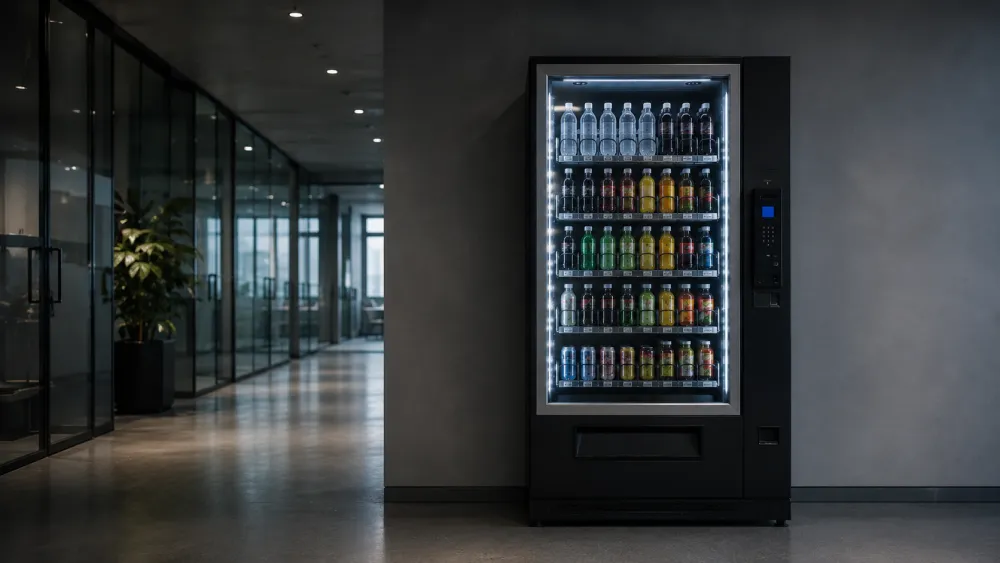
Cold drinks within reach are, at many sites, the first thing people miss. The catch: anyone still hungry half an hour later is not helped by a can. So here we set out what a drinks machine solves, and what one chilled fridge with drinks and food solves on top of that.
A drinks machine is usually the first machine a company installs, and that makes sense: it is the cheapest way to deal with a clear complaint. The next complaint is almost always the same: there is nothing to eat. So at many sites, two years on, there are two machines side by side, each with its own supplier and invoice, and neither well stocked. Especially at sites that run day and night, such as a logistics centre with night unloaders and drivers at the dock, a can is not enough.
A chilled smart fridge makes that split unnecessary. Cans, water and sports drinks sit on the same shelves as fresh meals and meal preps. You open it with a card or app, take what you need and payment happens automatically. You need one spot and one socket for it. What that costs compared with two separate machines depends on your site; the factors are in what a smart fridge costs.
They do not rule each other out, and most sites end up with a combination. The question is which of the three fills the gap you feel now.
The cheapest for water alone, and hard to beat if that is the only need. It does nothing against hunger, and anyone who wants something other than water still walks to the shop.
Cans and bottles, pay per item, a familiar system. Takes up space for a single product category and often sits idle once the novelty wears off.
The same cold drinks, but with fresh meals and meal preps next to them. Open with a card or app; the range follows what actually sells. What chilling makes possible that a spiral cannot is covered in healthy vending.
Torn between drinks only and a full fridge? The site check settles it. The number of people and the hours weigh more there than the preference of the moment. All types of vending machine at a glance.


Yes, and at most sites that is the logical choice. A smart fridge is a single chilled cabinet: cans, water and sports drinks sit next to fresh meals and meal preps. So you have one socket and one spot instead of two machines that are each half used.
No. Coffee is a hot drink and needs its own machine with water and milk supply, and a smart fridge is chilled. What we often see: the coffee corner stays as it is, and the fridge goes next to it for cold drinks, water and something to eat.
It varies too much to put a number on it. What is predictable: physical work and warm spaces push water consumption up, shifts spread it around the clock, and as soon as there is food in the fridge too, it gets opened more often. Whoever restocks adjusts the mix after a few weeks to what really sells.
Often it does, but the question is which of the two problems you have. If the machine works well and nobody complains, leave it and only look at the food side. If it is half empty or covered in notes, the restocking is usually the issue, and a fridge you own with a local supplier gives you control over that.
For water alone, certainly: a tap is hard to beat. But a tap does not close the gap after canteen hours and offers no alternative to the cans from the shop round the corner. Many sites combine: free water from the tap, and a fridge for the rest.
Eight short questions about your site and we call you back with a proposal that fits your hours and your people, from cold drinks only to a fully stocked fridge.
Takes about 90 seconds · no obligation · no contact details until the last step