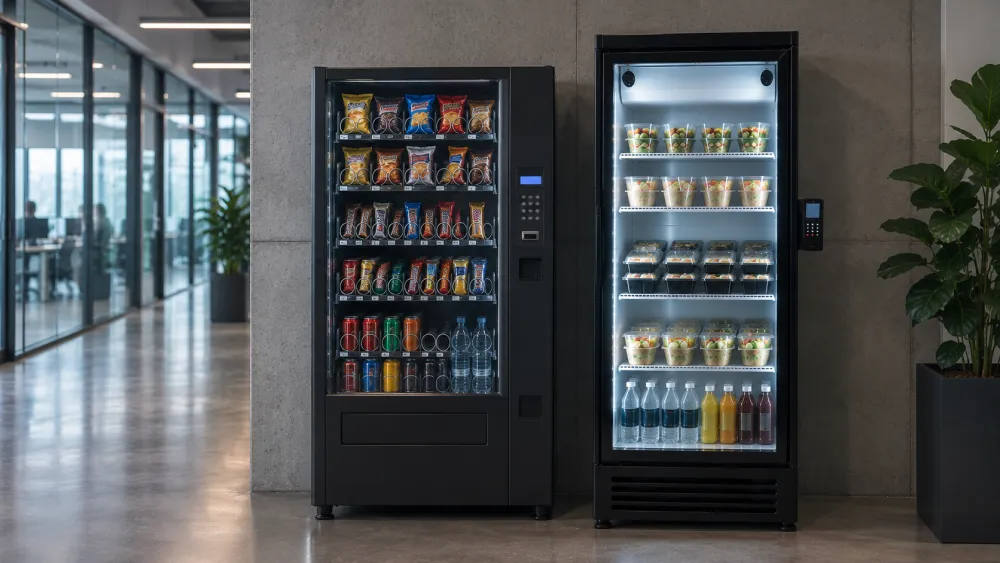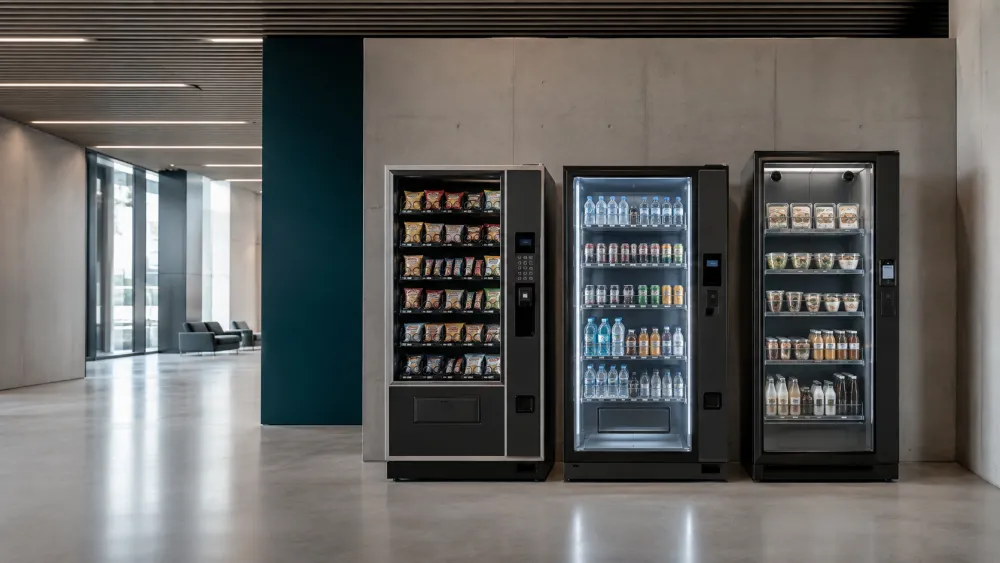
“Vending machine” is an umbrella term for four very different machines, and each covers a different need. Below they are set out side by side. We also say when you are better off not choosing the modern option.
The biggest difference is what you can put in them, and that determines who uses them.
Spirals, dry products, key in a code. Fine for a quick dip, too limited as soon as someone needs a meal.
Cans, bottles and water. Good against thirst and nothing else, while it takes up a whole cabinet.
Snacks and drinks in one cabinet. Saves space, but the chilling is usually too limited for fresh food.
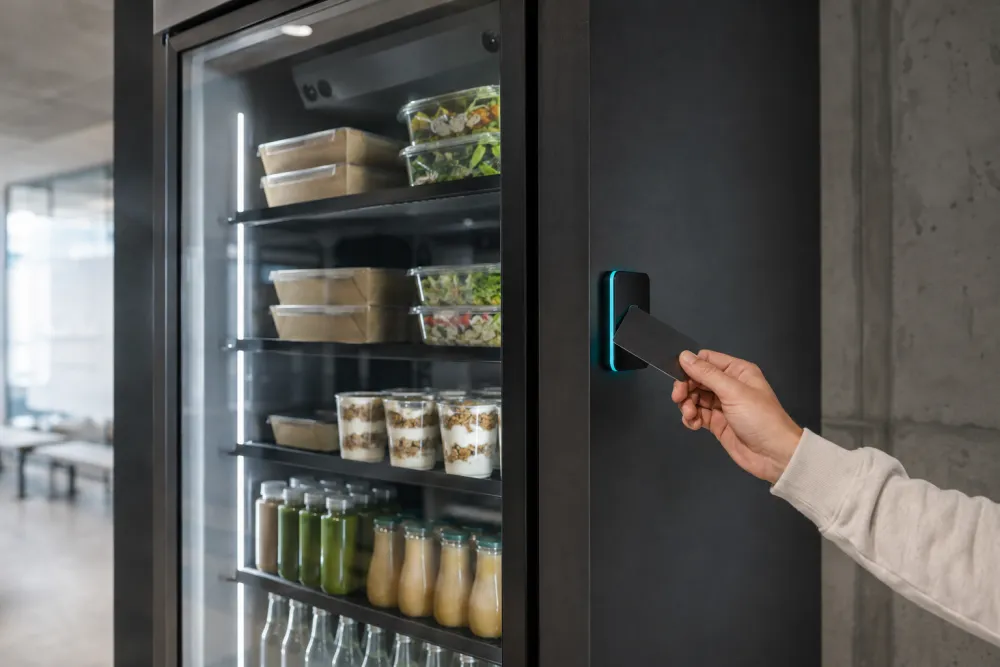
Fully chilled, opened with a card or app. Fresh meals, meal preps, snacks and drinks in the same cabinet.
More on the combi vending machine.
A vending machine only pays off if it gets used. A machine that sits half empty for months costs more than no machine at all: it takes up space, needs attention and nobody believes in it any more. That is why we look at the site first and only then at the machine, and at who carries the maintenance. What determines the cost is in what a smart fridge costs; if you would rather not invest, read what renting means in practice.
On most business sites, the further away the nearest shop and the longer people work, the more chilling matters. If everything stays within office hours and there is a sandwich shop on the corner, a limited range is often enough. Want to roll out healthy food as policy across several sites? Read healthy vending for business.


Roughly four. The snack machine with spirals for dry products, the drinks machine for cans and bottles, the combi machine that tries to do both in one cabinet, and the smart fridge: a fully chilled cabinet you open with a card or app that also takes fresh meals. Coffee machines are a category of their own with their own supply connections.
It mainly depends on how many people are there each day and at what hours. A small group present only during office hours can make do with a limited range. If people also work outside those hours, or nothing nearby is open, they want a real meal rather than a snack. For that you need chilling.
You do. You buy, rent or lease the unit and run it yourself, with your own team, your caterer or a local supplier doing the restocking.
Allow for the space of a large fridge plus some room in front to open the door. The location itself matters more than the square metres. On a route everyone uses, the machine gets used; in a side room nobody enters, it stays full. The site check looks at that separately.
Maintenance is covered by the warranty and, if you wish, a separate contract; we provide remote assistance, software and parts. Restocking is done by whoever you choose, guided by sales per product. Who handles this usually matters more than the purchase price.
Eight short questions about the number of people, the hours and what is there now. We call you back with a reasoned proposal. If a simpler machine will do, we will tell you that too.
Takes about 90 seconds · no obligation · no contact details until the last step