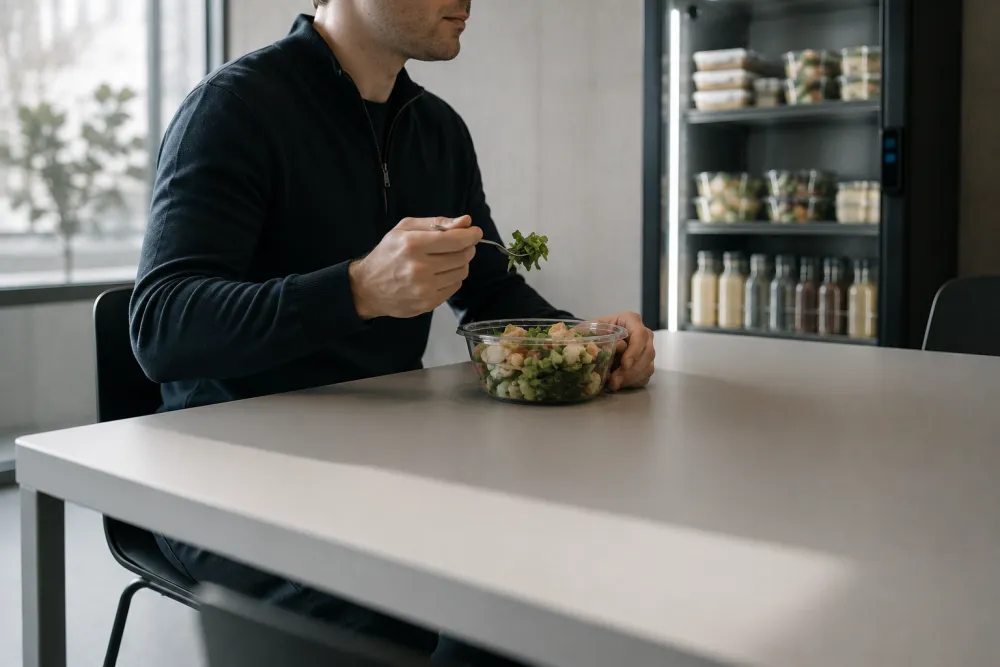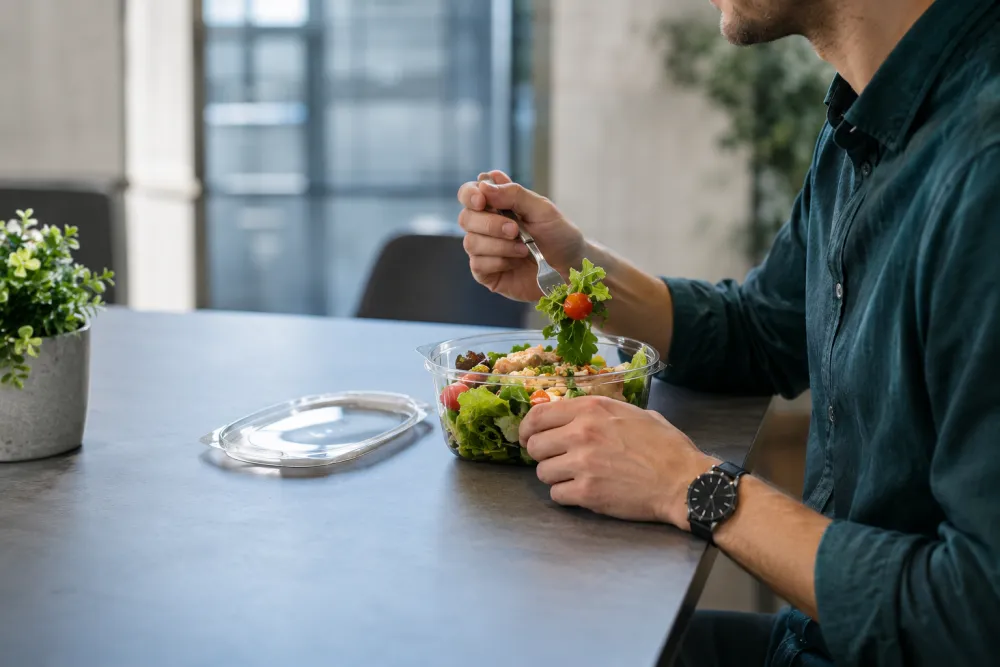
Companies that want to act usually start with the people: a campaign, fruit on Thursdays, a talk about nutrition. A month later the effect has mostly gone, and that is rarely the staff’s fault. At quarter past twelve there is simply nothing there. Anyone without a lunch can drive off, grab something from the machine in the corridor or skip it, and none of the three is healthy. Below: what actually helps.
When someone is hungry, their surroundings largely decide. If a fresh meal is thirty seconds away, that is what gets taken. If there is only a bar, it will be the bar, and if they have to take the car, it will be a petrol-station sandwich or nothing. Motivation only comes into play when there is a real choice.
A health campaign without an offer therefore rarely achieves much, while a well-chosen offer without a campaign works surprisingly often. As an employer, you cannot decide what people choose. You can decide what is there, and so how easy the healthy choice is.
These are the recurring factors at sites where a healthy offer is still going after six months.
In the spot everyone passes anyway. Hardly anyone makes the effort for a room they have to go out of their way for.
Something that replaces lunch. With snacks alone, people keep driving off at midday.
Healthy and ordinary in the same fridge. Take the crisps away and people buy them elsewhere.
Restocking weekly and adjusting to what sells. If nobody has that job, it stalls within a few weeks.
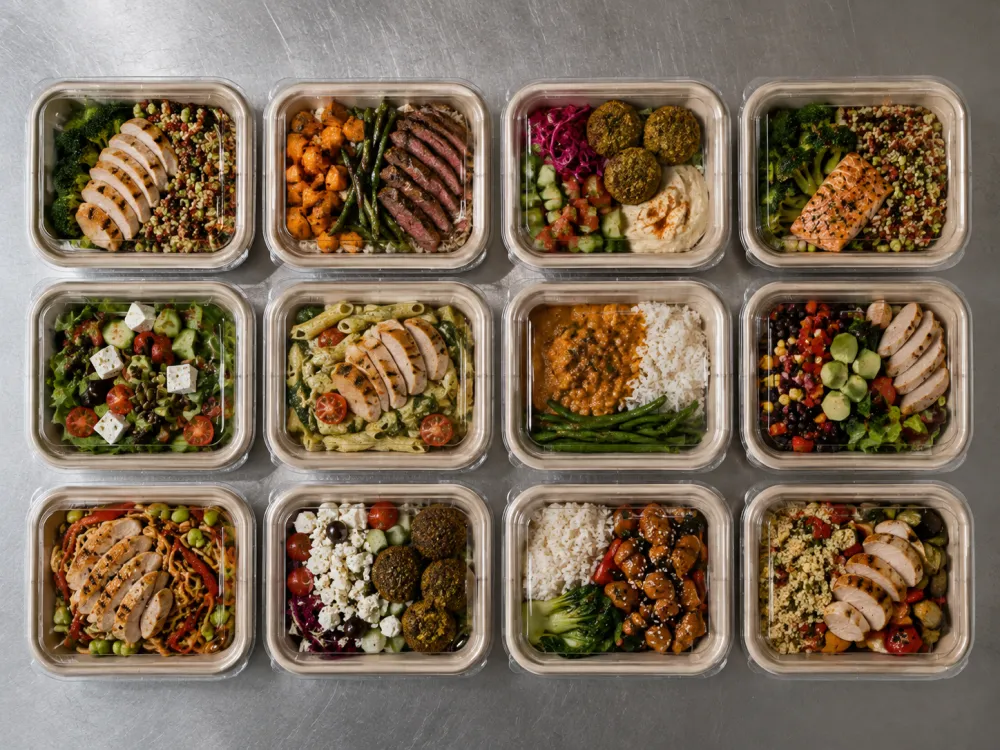
Salads, bowls, sandwiches and hot dishes that really replace a lunch. Nutrition and allergens on the pack. More in fresh meals.
Meal preps with solid protein content for people doing physical work or training. More in high-protein meals.
Halal, kosher, vegetarian and vegan options in the range, clearly labelled. More in halal vending.
We do not give nutrition or health advice. The fridge makes a good range available and easy to read; a health policy is something you draw up with your occupational health service.

Recognise three or more of these? A chilled fridge with fresh meals probably makes sense on your site. None? We will say that on the call too.
You buy the smart fridge and set the range and prices yourself. Useful when you want to align the offer tightly with your own health policy, or offer it entirely free.
The same smart fridge without buying it, with a fee or instalments over an agreed term. The range and restocking stay in your hands.
Your own team, your caterer or a local supplier fills the fridge with fresh meals, high-protein meal preps, halal, kosher, vegetarian and vegan options. Sales per product show what to order.
What each of the three costs depends on the number of people, the hours and the range. The factors are explained in what a smart fridge costs.

Usually because the offer and the moment do not line up. A fruit bowl in the corridor, a workshop or a poster changes little about the situation at quarter past twelve, when someone has nothing with them and the choice is between driving off, the sandwich machine or skipping lunch. If the healthy option is within reach at that moment, things do shift, without anyone needing to be convinced.
That is almost always counterproductive. As soon as an offer consists only of healthy options, people buy the rest outside and you also lose sight of what is really being eaten. A ratio works better: a good share of fresh and high-protein meals, with the usual snacks and drinks alongside. People keep their choice, and the healthy option is simply as close as the rest.
No. We make the fridge; what goes in it, with nutrition and allergens on the pack, is chosen by you and your supplier. For individual advice or a tailored health policy, work with your occupational health service or a dietitian, and stock the fridge within their framework.
From what disappears from the fridge. Sales per product show every week what goes and what stays, and that adjusts the range. The first weeks are a test. The opening range is rarely what is in the fridge three months later.
That is exactly where the difference is biggest. Anyone starting at five or finishing at eleven usually finds only a petrol station or a takeaway outside. A chilled fridge that is open day and night is often the only alternative on site at those hours. See also our page on 24/7 food at work.
Eight short questions about your site, including the number of people, the hours and what is there now. We will call you back with a proposal that fits your site, or tell you that a fridge does not pay off for you yet.
Takes about 90 seconds · no obligation · no contact details until the last step