A fridge with nobody standing next to it has to look after itself; the rest is checking at every restock. For a health and safety adviser, a facilities manager or a care facility, that is the first question: how does food stay safe in a place without staff? Below you follow the chain from kitchen to hand, with what can go wrong along the way and who checks what.
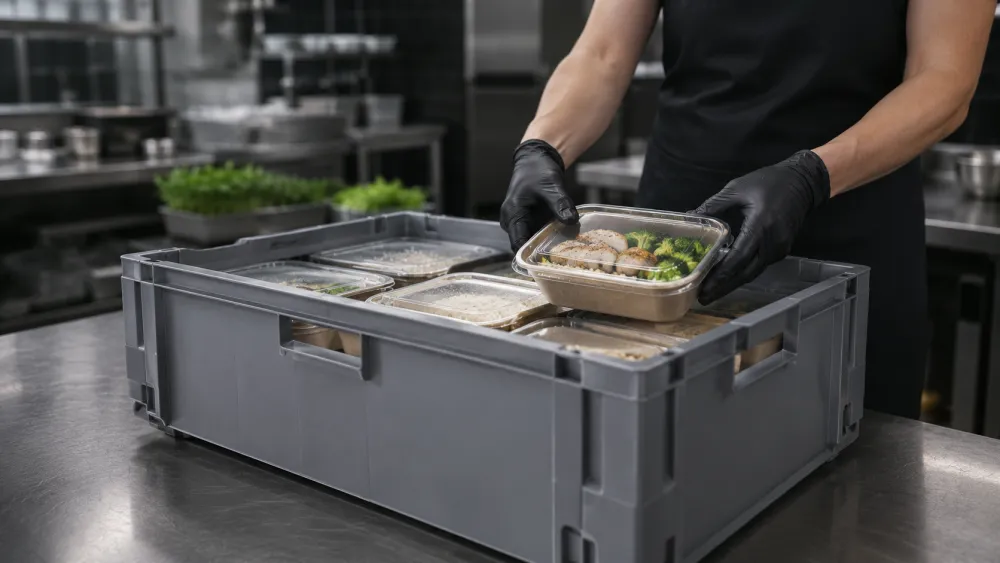
Freshly prepared and packed by the producer, with date, nutritional values and allergens on the box.
Chilled from the kitchen to your site, with no break in the chain.
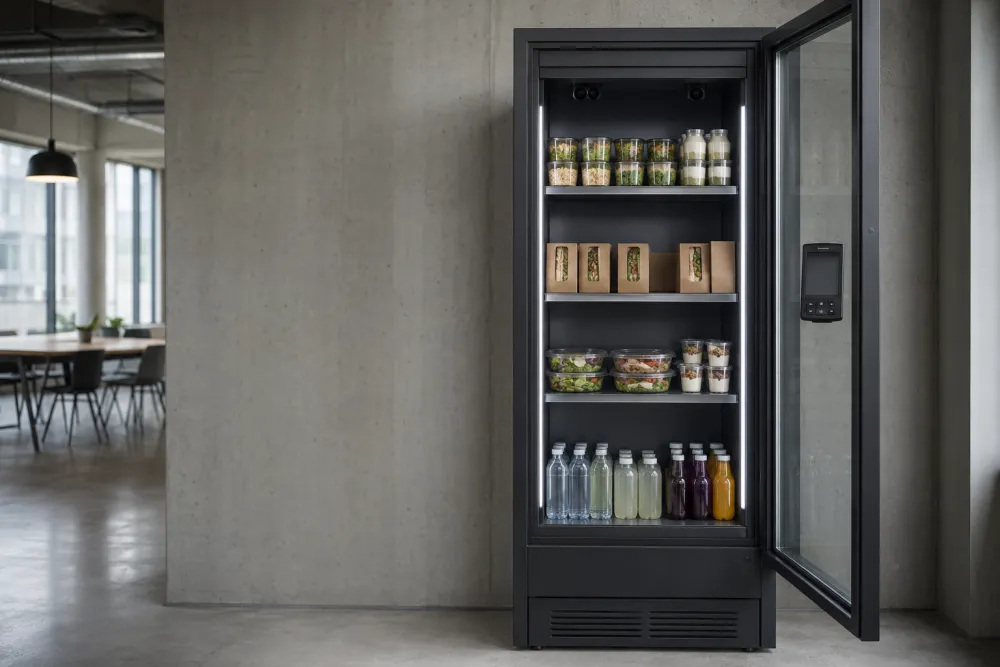
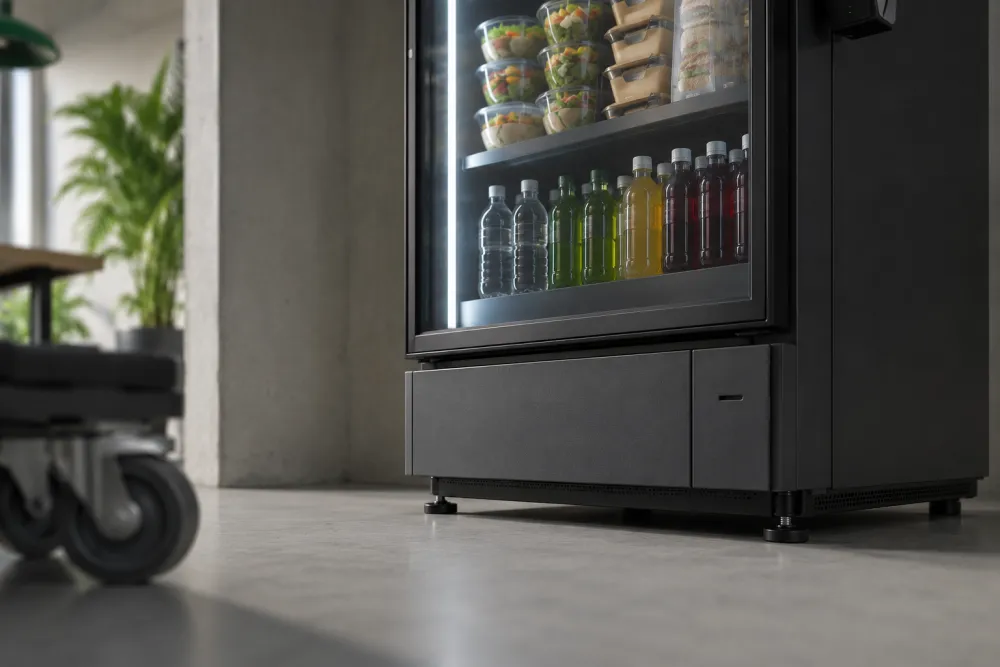
Holds its own temperature, day and night, without anyone watching it.
At every restock, temperature and dates are checked; what is nearing its date comes out.
The classic risks at work usually arise on site rather than in a supplier’s kitchen: a shared fridge nobody looks after, a door left open, a product that has been in the break room since last week. On sites that run day and night, this matters most; see 24/7 food at work.
A closed fridge removes part of that: the door closes by itself, products are individually packed and stay sealed until someone opens them. What remains is someone who checks temperature and dates. With fresh food, that weighs heaviest; see fresh meals at work.

| Who | How | |
|---|---|---|
| Transport to the fridge | Your supplier or caterer | Chilled, without breaking the chain |
| Fridge temperature | You or your team, or under a service contract | Checked at every restock |
| Dates and removal | Whoever restocks | Products nearing their date come out |
| In case of an outage | Agreed in advance | Who notices, who is called, what happens to the contents |
If you buy or rent the unit, temperature and dates are part of your maintenance; see maintenance and service.

Food safety in an unstaffed spot is arranged in advance, because if something goes wrong, nobody is there to improvise. Before it goes into service, agree who notices an outage, who it is reported to, what happens to the contents and who the contact person on site is.
The location counts too: out of direct sunlight, not next to a heat source, with room to open the door, and a socket that does not get switched off by accident when someone turns off the lights in the evening.
In a care facility or a manufacturing site with hygiene rules, the fridge stands outside the care or production zone. The exact spot is set by your own hygiene or infection prevention team; their framework applies. The fridge is not meant for patient nutrition; see smart fridge for a care facility.
What the fridge costs depends on your people, hours and the route you choose; see what a smart fridge costs.
Each of these questions should have an answer in the arrangements made before the fridge goes into service. Food hygiene rules differ by country; check them with your adviser. We do not give nutrition or health advice. Nutritional values and allergens are on every pack; for individual questions, a dietitian or your occupational health doctor is the right person to ask.
Agree in advance who notices an outage, who it is reported to and what happens to the products. Products that are no longer safe come out.
You do, or you take out maintenance as a separate contract. Checking temperature at every restock is the simplest routine.
Yes. Every product has its own pack, stays sealed until someone opens it and carries the date, nutritional values and allergens.
We advise against it. The fridge is a point of sale with a controlled chain; personal food belongs in a separate fridge in the break room. That way it stays clear to everyone what is in the fridge.
Until before the date on the pack. It is better to take them out earlier, so nobody finds a product right at the limit.
Eight short questions about your site. In the conversation we look at who checks what, also outside office hours.
Takes about 90 seconds · no obligation · no contact details until the last step