Every hotel knows the moment: quarter to eleven, the kitchen has gone cold and someone at the desk has not eaten since lunch. The receptionist points to the late-night shop round the corner; there is nothing more they can do. The same building also has people starting at six or working until four in the morning, and they have the same problem.
For the guest, the difference is being able to offer something instead of saying “sorry, the kitchen is closed”. For business and airport guests, arriving late is the norm, and a closed kitchen is one of the first things to end up in a review.
For your own staff it is the same hours: the night desk, housekeeping starting early, kitchen staff who only get to eat after service. The hotel kitchen cooks for everyone except the people working outside its hours. That usually only shows when someone asks.
| Option | Staff needed | Real meal | Watch out for |
|---|---|---|---|
| Night room service | Yes, continuously | Yes | Rarely viable outside large hotels |
| Minibar in the room | Yes, checks at check-out | No | Disputes over consumption, limited range |
| Snack machine in the corridor | No | No | Dry products, rarely suits your image |
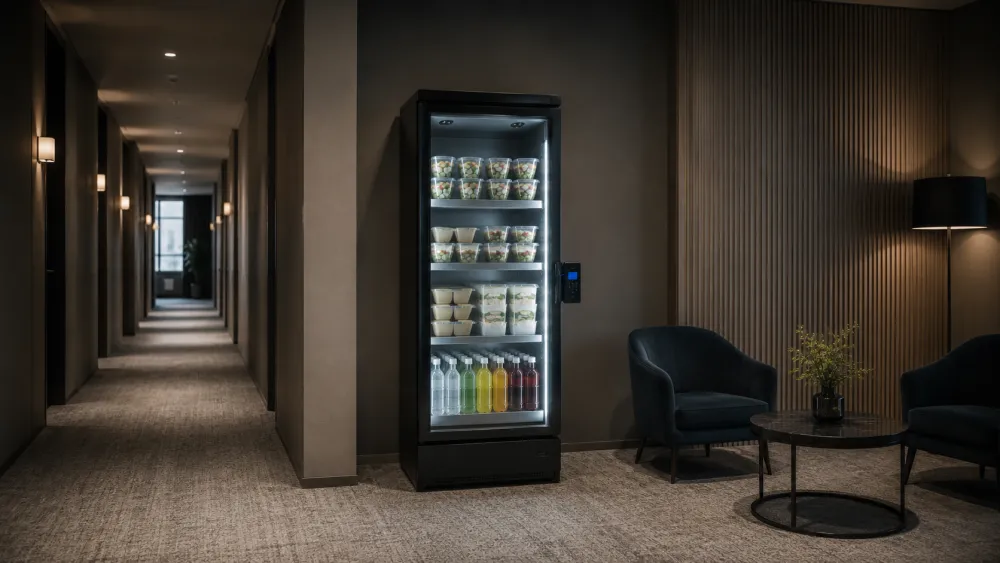
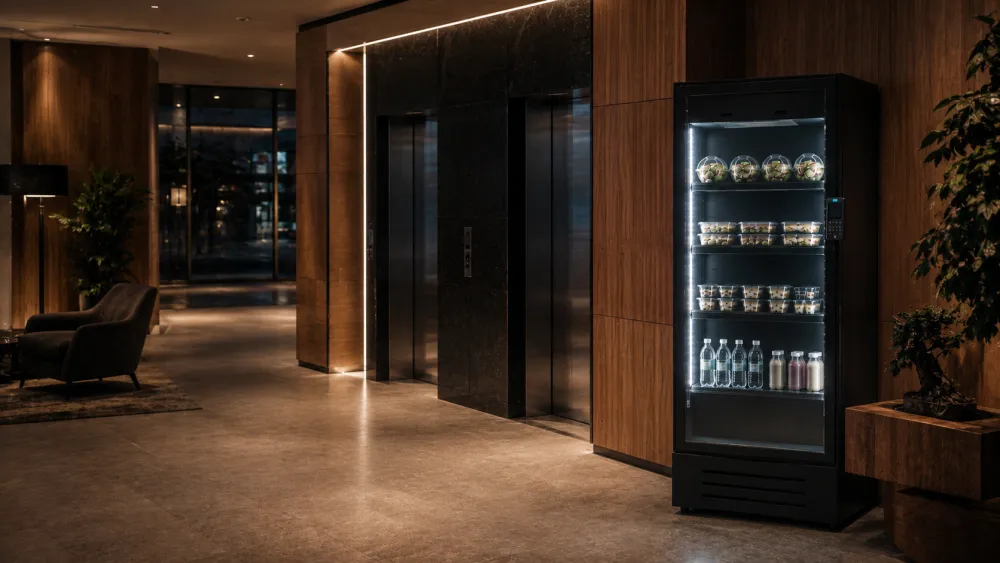
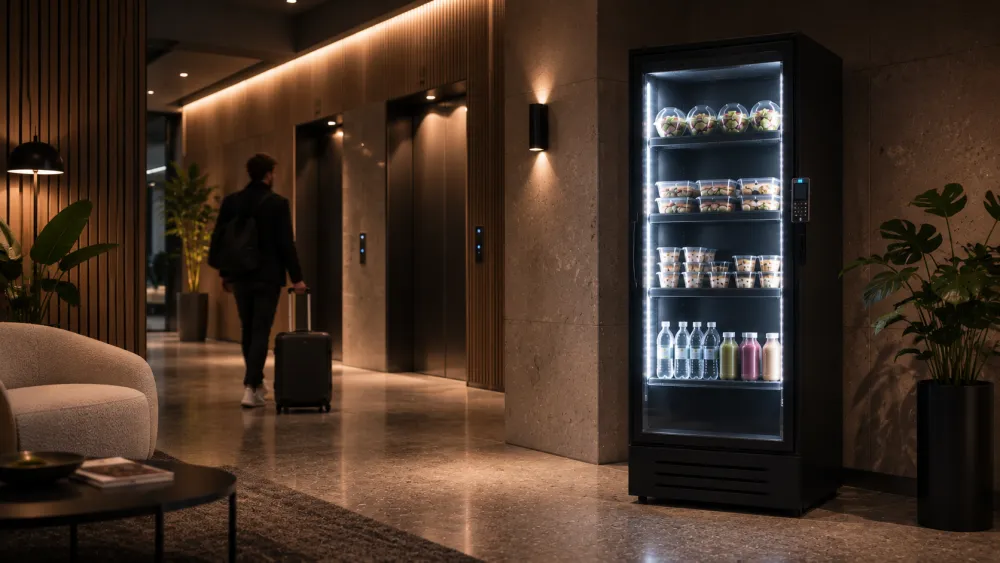
| Chilled cabinet in the lobby | No | Yes | Needs enough footfall for fresh food |
If you buy the unit, you choose the range and prices yourself and keep the margin. Restocking can be done by your own team, your caterer or a local supplier, and the software shows what sells and what is nearing its date. A garage with waiting customers approaches it the same way.


Often, and usually to your advantage. A minibar has to be checked at every check-out, causes disputes about what was consumed and only holds drinks and snacks. A central cabinet in the lobby or on a floor serves all guests, is restocked in one round and can also offer a meal. Some hotels keep minibars in the suites and add a cabinet, and the two work well together.
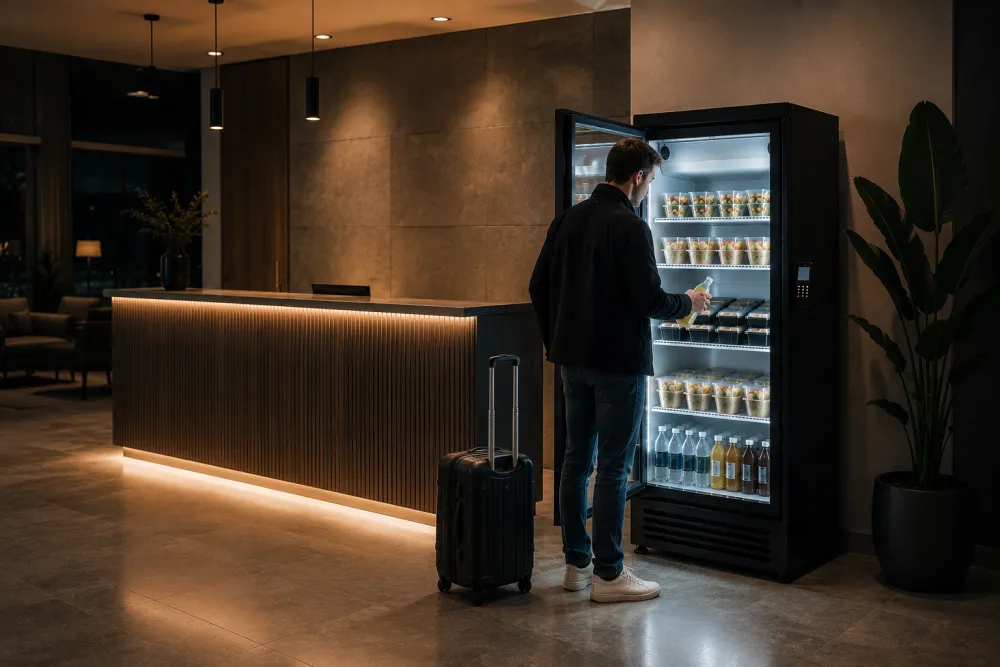
A guest arriving at eleven after a delayed flight or a long drive gets an apology and directions to the late-night shop in most hotels. With a chilled cabinet in the lobby, they can take a fresh meal, a salad or a drink. Your night receptionist does not have to do anything for it.
You decide. You set the range and prices and restock with your own team, or have your caterer or a local supplier do it. The software shows what sells and what is approaching its date, so whoever restocks knows what to bring and what to remove.
Yes, and that reason tips the balance more often than the guests. The night desk, housekeeping starting at six and kitchen staff after service all work at hours when the hotel kitchen no longer serves anything. A cabinet in the staff room or behind the desk covers that, with separate staff prices if you like.
Often not yet for fresh food, because there is too little footfall to sell through the cabinet before the dates run out. What does work is a smaller range with a longer shelf life, or drinks and snacks topped up with a few fresh products. If fresh food will not sell at your hotel, we say so straight away. Otherwise you are looking at a half-full cabinet after two months.
Eight short questions about your hotel: number of rooms, occupancy and kitchen hours. We call you back with a proposal for the lobby, a floor or the staff room.
Takes about 90 seconds · no obligation · no contact details until the last step