Every supplier says “fresh”, but few explain what it involves. In practice it means a short shelf life. For that you need cooling in the right place, enough footfall to turn the fridge over, and someone checking the dates every week. If one of the three is missing, you drift back to dry products by yourself.
Cooling without footfall gives you a fridge full of products running into their dates. Footfall without follow-up, and after two weeks you see gaps next to products that have been there too long. And good follow-up without an unbroken chain from kitchen to fridge means checking something that already went wrong on the way.
That is why a site is assessed on all three before anything is proposed. For the same reason we sometimes say fresh is not yet feasible for you: better that than a half-full fridge of last week’s products.
Four ways to get a meal onto a work floor, compared on three points.
| Form | Ready to eat | Available out of hours | Who carries the loss |
|---|---|---|---|
| Caterer or sandwich service | Yes | No, to order and at agreed times | You, if too much was ordered |
| Frozen meals | After heating | Yes | Little waste, but little sense of fresh |
| Dry vending machine | Yes, but not a meal | Yes | The supplier |
| Chilled fridge with fresh meals | Yes | Yes, day and night | Whoever buys the stock; low when ordered to sales |
Look mainly at the last column. When you buy in yourself, you pay for every meal nobody takes, which is why internal initiatives often stop after a few months. Ordering to sales per product keeps that loss down. How the cost is built up per option is in what a smart fridge costs.

The more of these points are true, the fresher the range can be. If few are, a longer-life range is more honest than promising fresh food that will not turn over.

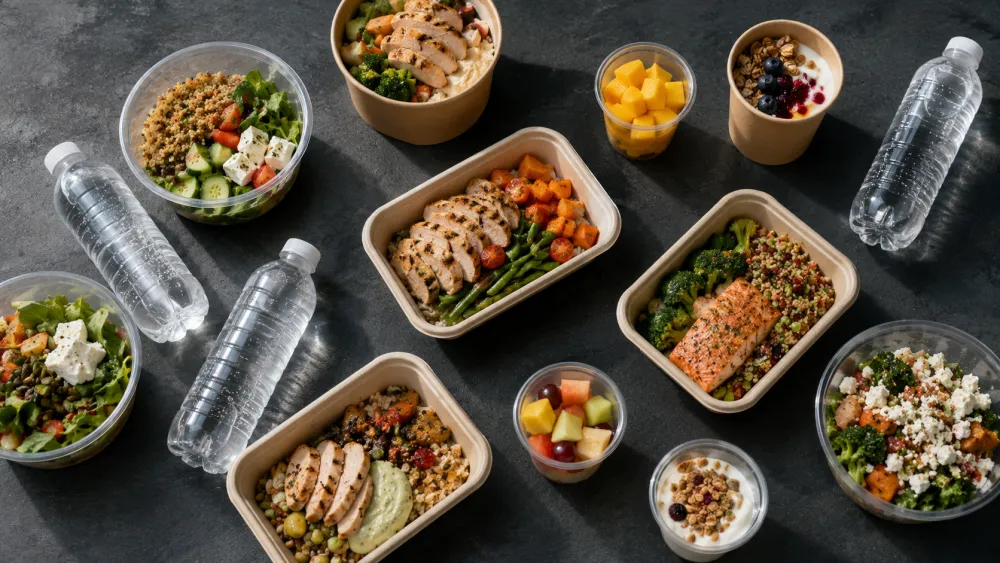
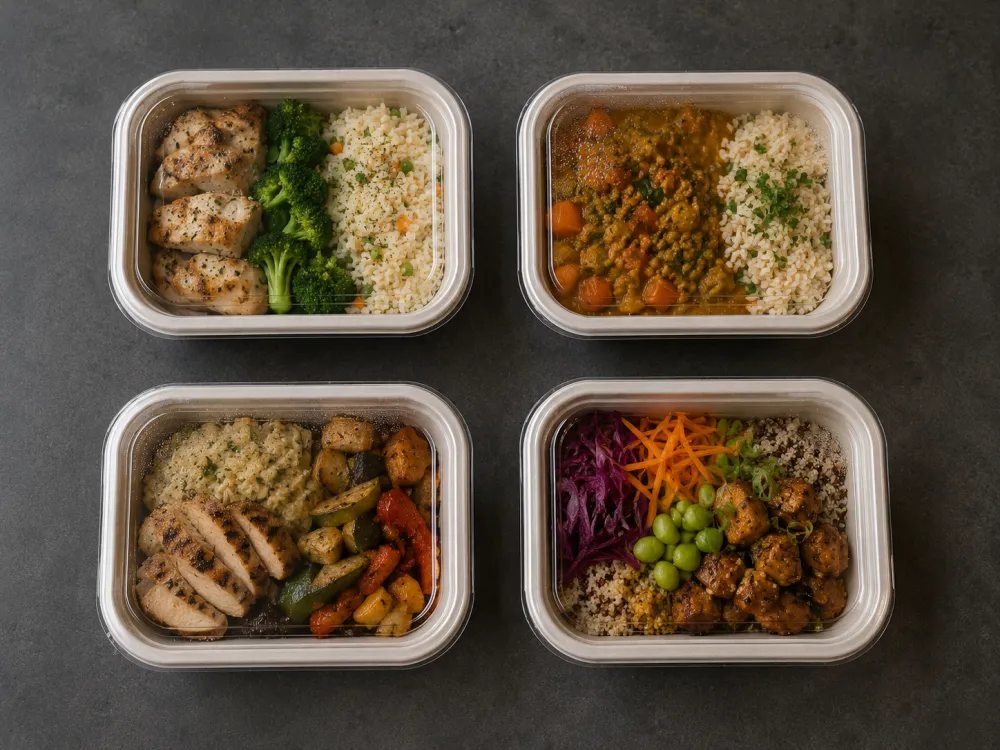
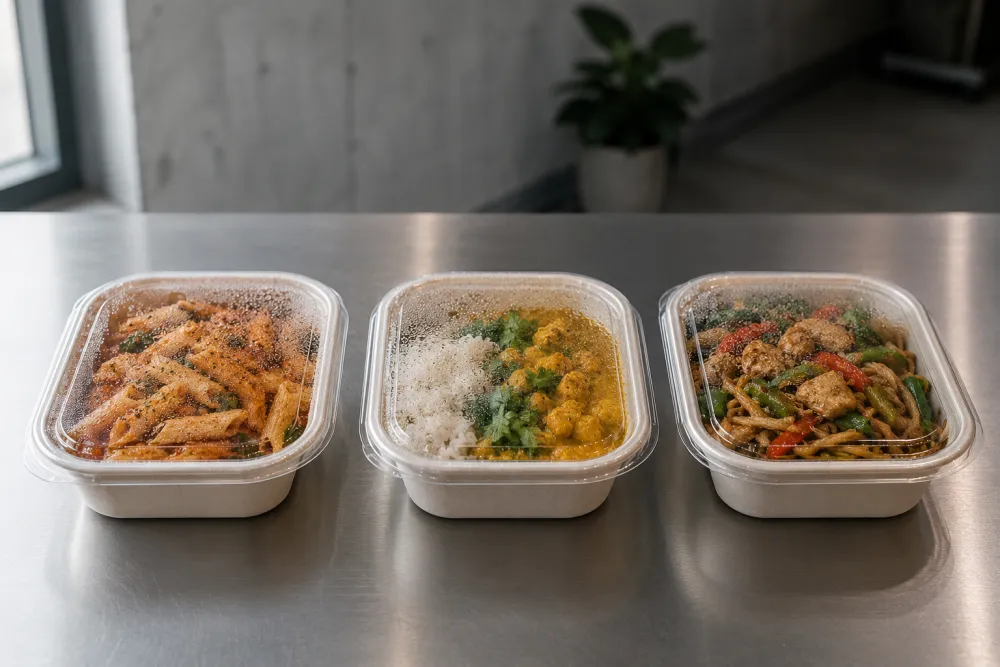
Chilled dishes with a short shelf life: salads, bowls, filled sandwiches, pasta dishes, hot meals to reheat. A frozen meal keeps for months but has to thaw or heat for a long time; a dry vending product also keeps for months but is not a meal. Fresh sits in between: ready to eat now, with a date that matters.
Anything close to its date comes out at the next restock, and the loss sits with whoever bought the stock. If you buy and fill the unit yourself, you carry that risk, which is why ordering to sales per product matters so much.
Not for cold dishes. If you want to offer hot meals too, a microwave next to the fridge is almost always needed. There is often one in the break room already. On sites with no eating area at all, look for a spot where one can go; otherwise keep the range deliberately cold.
The fridge holds its own temperature, and whoever restocks checks it on every visit, together with the dates of what is inside. Products nearing their date come out before they reach it. Our remote support helps when something is wrong.
Fresh food lives on rotation: there has to be enough footfall to turn the fridge over before the dates expire. From around fifty people a day it gets interesting, from a hundred it is usually clear, and with 24/7 or shift working it tips sooner because the fridge is visited at more moments. Below that, a more limited or longer-life range is more honest.
Answer eight short questions about your site, including the number of people and working hours. We will call you back with a proposal for range and rhythm, or with the honest answer that fresh will not turn over for you yet.
Takes about 90 seconds · no obligation · no contact details until the last step