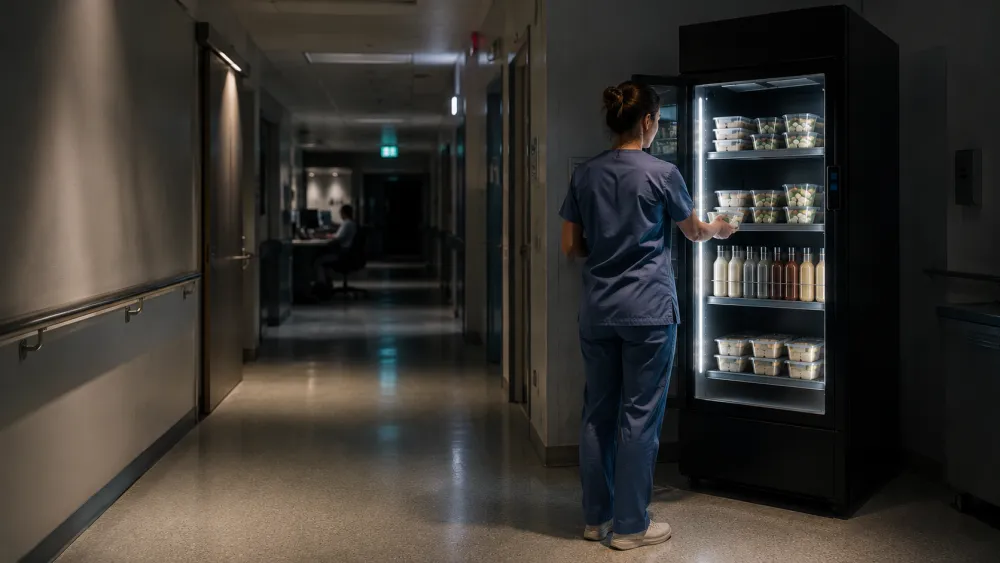
A care facility runs twenty-four hours a day; the cafeteria does not. Anyone on nights, anyone starting at quarter to seven, anyone on a ward where the break is twenty minutes and the lift is slow eats what they brought or does not eat. The same corridors hold a second group with nothing on offer: family members who stay, and people waiting through the night.
The break in care cannot be planned. It shifts with the ward, gets interrupted and is short. Two lifts, a closed cafeteria, a machine with only dry products: every detour ends in practice with people working on and only eating at home.
For the night shift that goes double: nothing outside the building is open either. Other on-call services, such as fire and police, know the same. A chilled cabinet close to the ward has no opening hours and needs no staff, so there is food at the hours when there is nothing now.
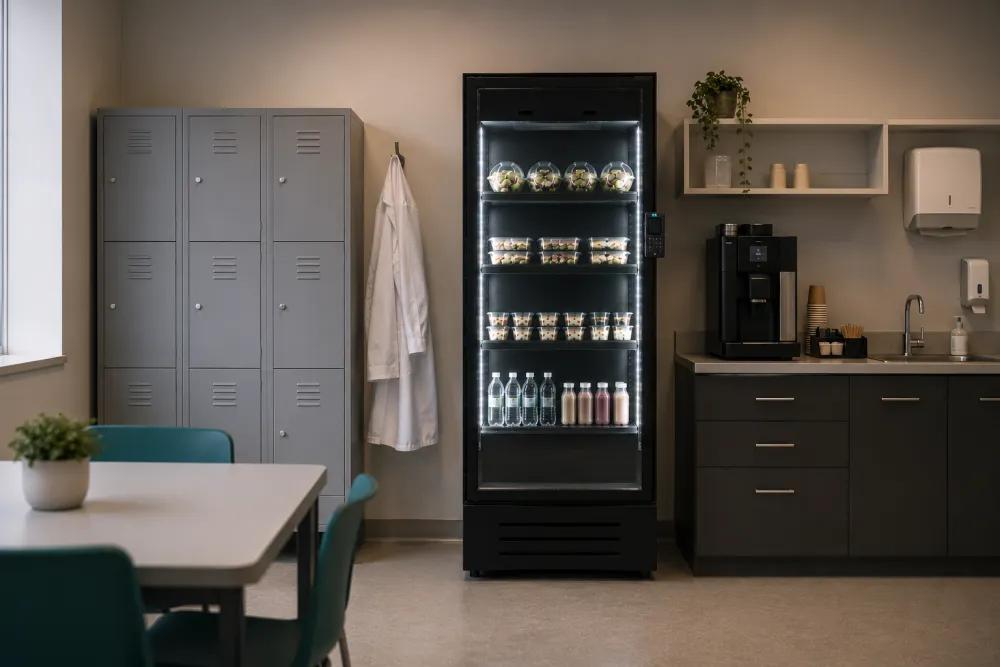
In or next to the staff room, reachable during the break without lifts. For those who cannot leave the ward for long.
On the route to and from the shift. For those starting early or leaving late and taking something on the way.
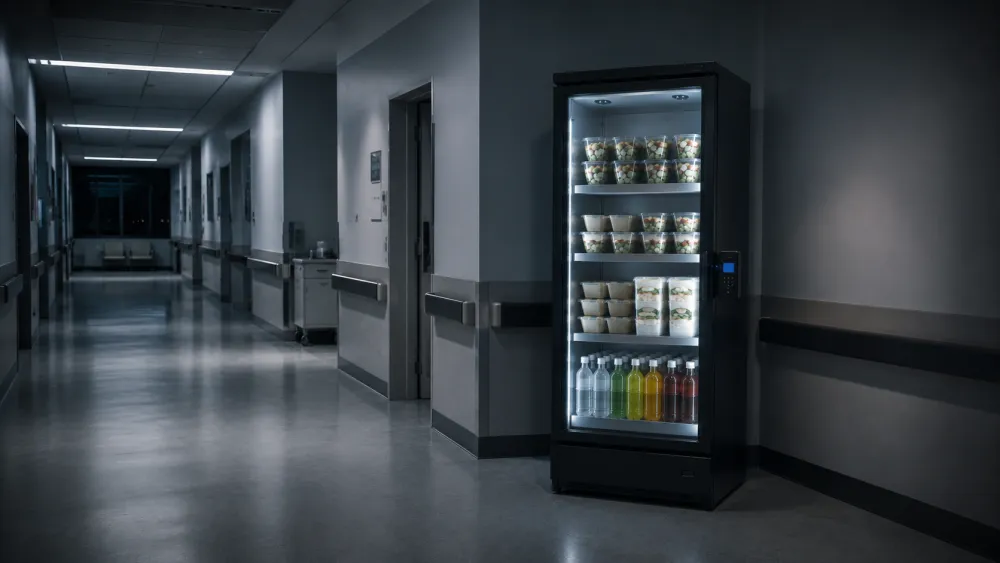
For visitors and people waiting, at the hours when the cafeteria is closed. Often a bigger share of use than expected.
The spot is set by your infection prevention and control team, and their framework applies. What else is monitored is covered in food safety in the vending machine.
This is not patient food. Food linked to diets, allergies or medical care belongs with your own kitchen and dietitians. The cabinet is for staff and visitors only.


No, and that is a deliberate limit. Food for patients or residents is linked to diets, allergies and medical care, and belongs with your own kitchen and dietitians. The cabinet is for staff and visitors: fresh meals and drinks at the hours when your cafeteria is closed.
That is usually the deciding reason. A ground-floor cafeteria is practically out of reach for someone with a twenty-minute break on the fourth floor. With the cabinet in or near the ward’s own staff room, people do eat during their shift.
Outside clinical areas: in the staff room, the corridor to the changing rooms, the hall or the waiting area. Products are individually wrapped and stay sealed until the user opens them. Your infection prevention and control team decides the exact spot, within their framework.
Yes, and at some sites that is half the use. Family staying during an admission, people waiting at A&E overnight: they often find nothing. A cabinet in the hall or waiting area solves that without staff having to stay. Whether it goes in the same spot as the one for your own people is worth looking at together.
Yes. Halal, kosher, vegetarian and vegan options are part of the standard range and labelled recognisably on the pack. With a diverse care team you need those options, or part of your staff ends up empty-handed in front of the cabinet.
Eight short questions about your facility: staff numbers, shifts and what is open now. We call you back with a proposal per spot: ward, changing rooms or waiting area.
Takes about 90 seconds · no obligation · no contact details until the last step