Smart fridges for businesses · Buy · rent · lease
+32 466 15 47 23 Free site check
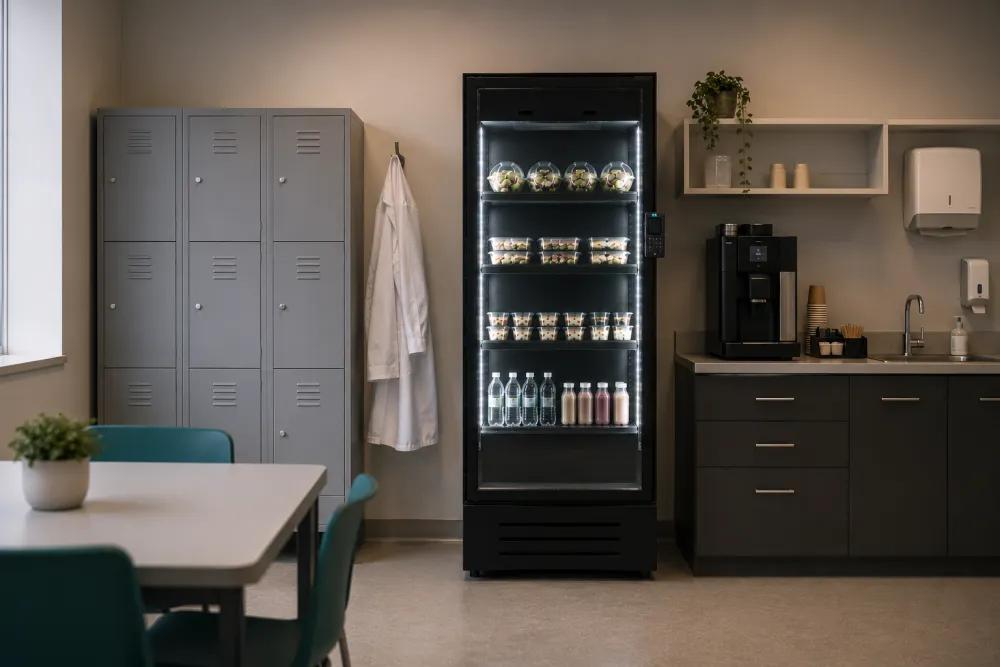
Staff room with lockers and a smart fridge
For fire, police and armed forces

Smart fridge
for a station or barracks

Anyone on watch eats when it is quiet, and nobody knows in advance when that will be. At a fire station, a police station or a barracks, the service runs day and night. The watch cannot simply leave the building, and when a call comes in the plate is sometimes left half full. This page covers how a chilled cabinet works there and what to arrange beforehand.

Day and night Inside the building A meal that can wait
The situation

Cannot leave,
do not know when

A watch has to be able to turn out within minutes, so popping out for food is not an option. A delivery at a fixed time often arrives just as the watch has gone out. And at night there is rarely anything still open nearby; that hours gap is covered in 24/7 food at work.

How a night shift is organised in general is covered in feeding the night shift. In care, something similar happens with night staff who cannot leave the ward; see smart fridge for a care facility.

On watch 24/7 Secure building
Where it pinches at a station
  • Eating when it is quiet
  • Something open nearby at night
  • A meal that copes with an interruption
  • Someone doing the shopping for the watch
  • Food at weekends and on bank holidays
  • A shared kitty that adds up
Being on watch

What a cabinet
has to handle here

01

Able to wait

The meal stays chilled and only goes in the microwave when there is time. What reheats well is covered in hot meals.

02

Inside the building

A spot inside the secure area, with agreed access for restocking.

03

Quiet and busy nights

After a night full of call-outs, more sells than after a quiet one. Restock based on what actually sold.

04

Your purchasing rules

Which purchasing procedure your organisation follows, you know best. We provide the details you need for it.

What power and space the spot needs is covered in technical requirements.

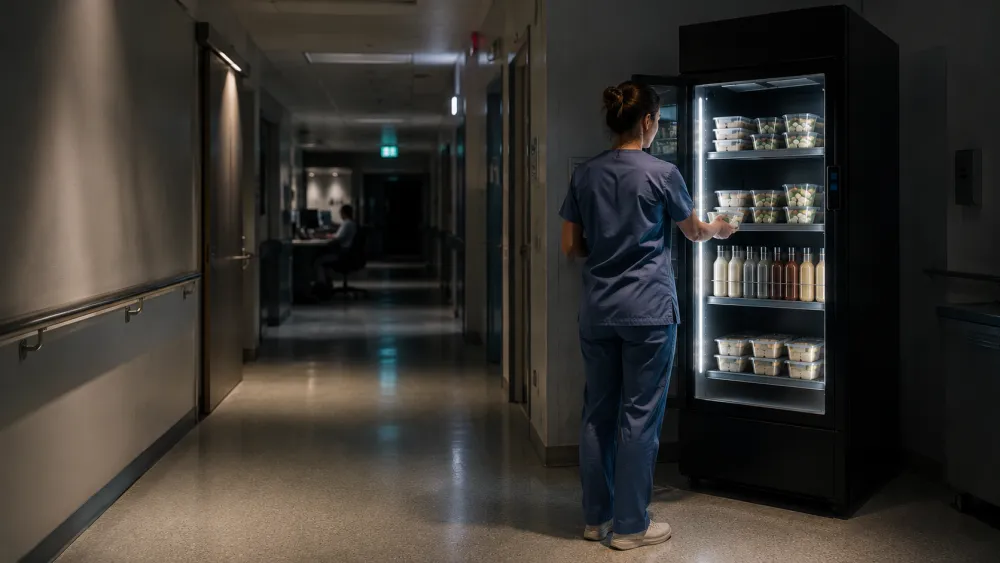
Person on night duty at the cabinet
When it pays off

What does
your station look like?

If you recognise many of these points, a cabinet has a good chance of selling through quickly. With two or fewer, we would rather suggest something smaller.

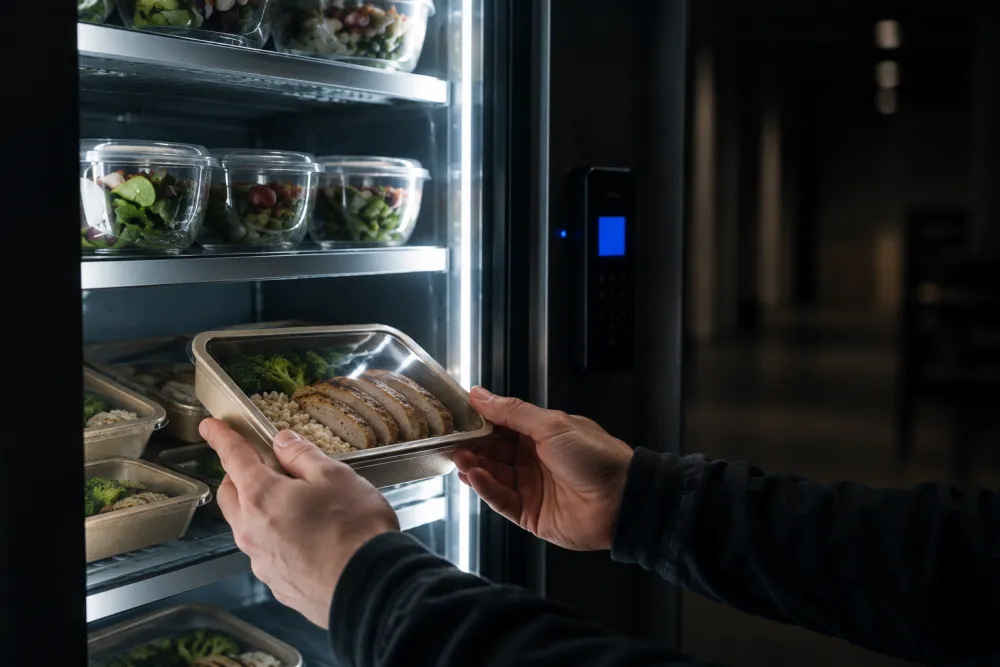
Hand taking a meal tray from the cabinet
In practice

From conversation
to a working cabinet

01

Map the shifts

The watches and their hours, and when it is usually quiet enough to eat.

02

Spot and access

The cabinet goes in a room the watch passes every shift, and restocking gets a fixed route in.

03

Range

Dishes that cope with reheating and something light for the night, plus drinks for those coming back from a call-out.

04

Adjust

After a few weeks you can see what quiet and busy nights take, and the mix can be adjusted.

What goes in

A meal
between two calls

For the quiet moments there are dishes to heat up. Anyone with only ten minutes takes something quick, and there is always something to drink. At night most people prefer not to eat too heavily; what works then is covered in feeding the night shift.

Everyone pays for themselves by bank card, app or badge, so nobody on the watch has to keep a kitty any more. If several stations in the same area are interested, look at each one separately and make the arrangements centrally.

How to set it up
Read on
Industry, logistics and construction
Buildings and services
Costs and options
Frequently asked questions

About a cabinet
at a station

Can restocking happen in a secure building?

Yes. At the site visit, agree the entrance, escort and time. Restocking happens during the day, at the time your service sets.

Can the cabinet go in the mess room or the station kitchen?

Yes, if the watch passes there every day and there is a socket. The station kitchen is often a good choice, because the microwave is already there.

What if a meal is left because of a call?

As long as the meal is in the cabinet, it stays chilled until there is time. If it had already been heated, follow the instructions on the pack from there. That is why the range should favour dishes that cope well with reheating.

Can several stations in the same area start together?

They can. The arrangements are then made centrally, while each station gets its own spot and range. It usually makes sense to start at the station with the biggest gap and only expand when sales there justify it.

Who pays: the staff member or the organisation?

Either works. Staff pay per product, or the organisation contributes, for example only during the night watch. You set that on the cabinet itself.

What does your watch eat at four in the morning?

Eight short questions about the watch at your station. Then you hear from us whether a cabinet makes sense there.

Free site check See the options

Takes about 90 seconds · no obligation · no contact details until the last step