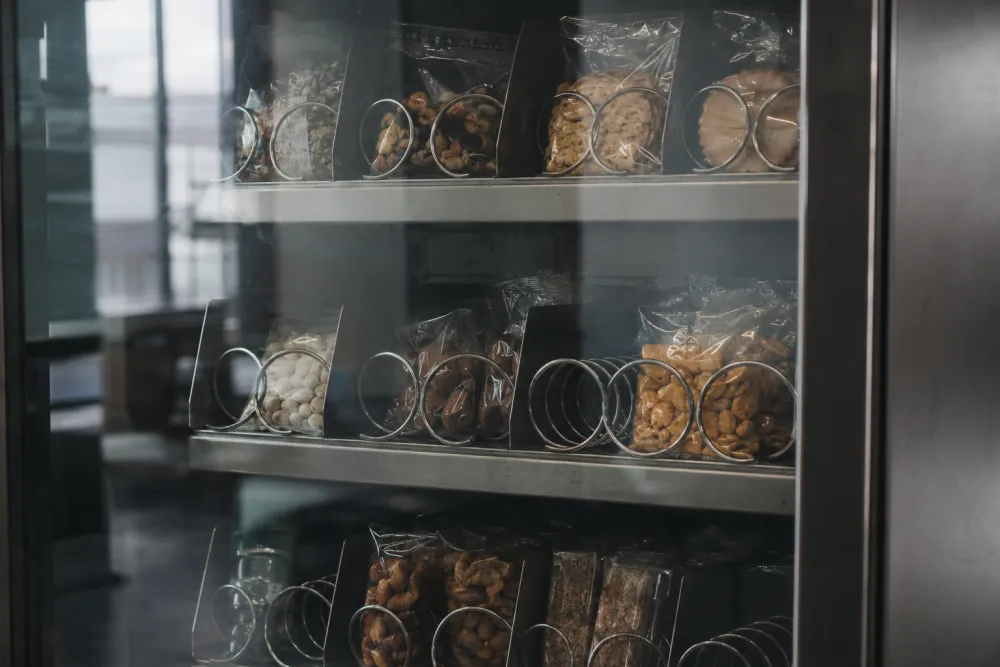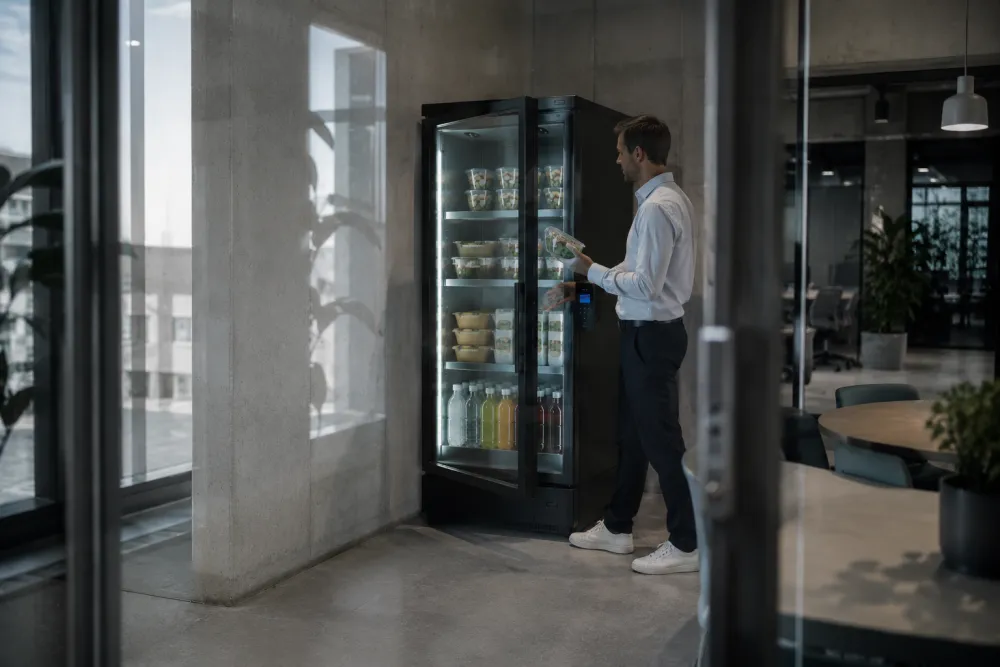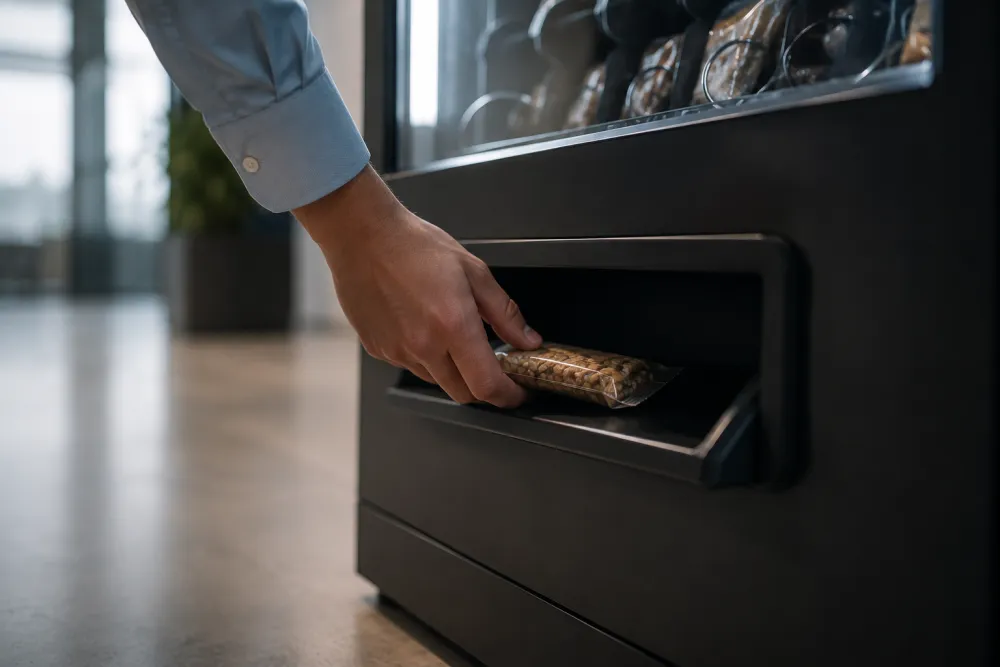
Almost every office has tried something: a fruit bowl, a drawer of biscuits, a cupboard someone tops up. The aim is always the same: people should not work on an empty stomach or keep popping out. What follows is predictable too. The sweet stuff disappears, the healthy stuff stays, and eventually nobody refills. Below is why that happens and what actually lasts. Already have a machine and doubting the machine itself? Read office snack machine.
Anyone providing office snacks is thinking of the afternoon. Yet the question almost always ends up at lunchtime: the colleague with no lunch who has to choose between half an hour’s drive or nothing. A drawer of chocolate bars does not solve that, however well stocked, and certainly not on days the office is half empty.
The second pattern is about who carries it. Buying, topping up and following up almost always lands on one person in an office, usually the office manager, on top of their own job. If they are on leave or busy, the cupboard is empty.
All four turn up in offices. They differ in who carries the work and in whether lunch gets sorted too.
| Approach | Who does the work | Covers lunch | Weak point |
|---|---|---|---|
| Fruit bowl or snack drawer | A colleague, on top of their job | No | Stops as soon as that person is away |
| Snack box subscription | The supplier delivers, you hand out | No | Fixed package, little steering on what is left |
| Traditional snack machine | The supplier | No, only dry products | Quickly becomes the “sugar cupboard” in the corridor |
| Smart fridge with meals | Your team or a supplier, guided by sales | Yes, with fresh meals and salads | Only pays off with enough people on site |
The bottom row is what we make. If there are thirty of you in the office with a shop round the corner, a well-run snack cupboard is enough, and we will tell you so. What that means for a smaller business is covered separately.

Salads, sandwiches and fresh meals. That way the fridge covers lunch too, something a fruit bowl or snack drawer never does.
Fruit, yoghurt, nuts and high-protein portions, with the classic biscuit and soft drink right next to them.
Halal, kosher, vegetarian and vegan as well, so nobody on the floor is left outside the offer.
If you want to steer the offer towards health deliberately, read healthy eating at work.

Two groups, belonging to two different moments. Around lunchtime it is whatever comes close to a meal: a salad, a sandwich, a hot portion. In the afternoon something small: fruit, yoghurt, nuts, a bar. An offer that only covers the second group gets used, but lunchtime stays open, and that was usually exactly what prompted the question.
People do like fruit, but a piece of fruit asks for effort at the moment someone wants something quick. Ready-to-eat fruit does sell, as do high-protein portions that feel like a proper snack. So do not drop the fruit: put healthy and classic side by side and let people choose. Offer only healthy options and you will simply see biscuits coming in from outside.
That depends on the model. Buying yourself means a budget per person per month plus the time of whoever organises it, and with free snacks more disappears than budgeted, structurally. With a fridge you buy, rent or lease, employees pay for their own products, possibly with a subsidy from you, and you pay for the unit and the restocking.
Often not yet. Below fifty people on office hours, a well-run supply cupboard is usually the better move, unless there is nothing nearby or people are also there outside office hours. From around fifty people, and certainly a hundred, that tips. If you are below that line, you will hear it on the call.
Set a balance and leave the products in. Part fresh and high-protein options, part classic snacks and drinks, with halal, kosher, vegetarian and vegan so nobody is left out. After that, what actually sells adjusts the mix, not a list that was drawn up once.
Answer eight short questions about your office, such as the number of people, the hours and what is already there. You get a call with a tailored proposal, or with the advice to change nothing.
Takes about 90 seconds · no obligation · no contact details until the last step