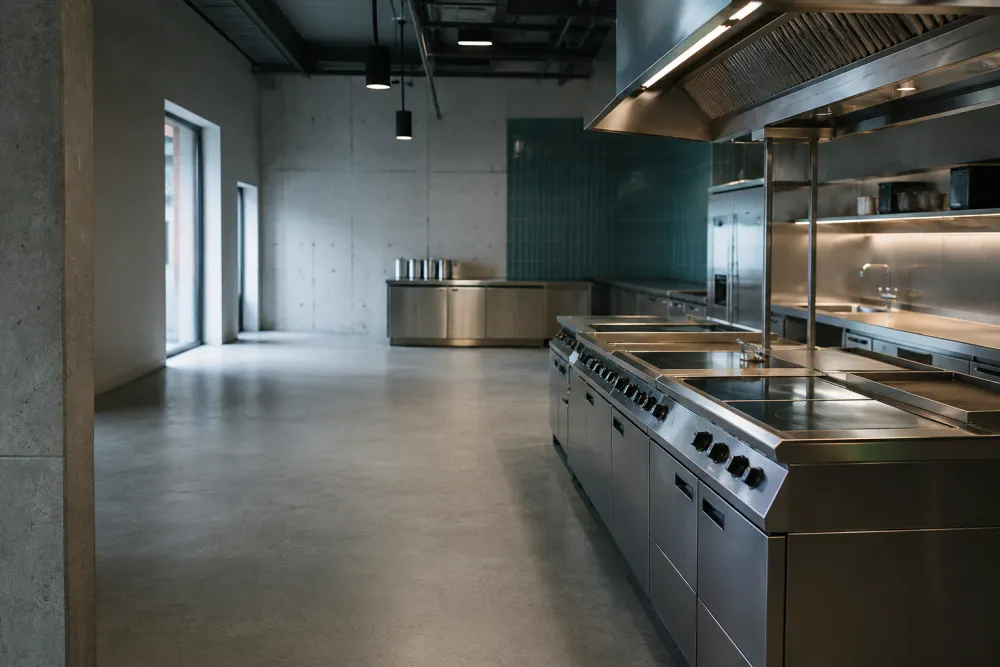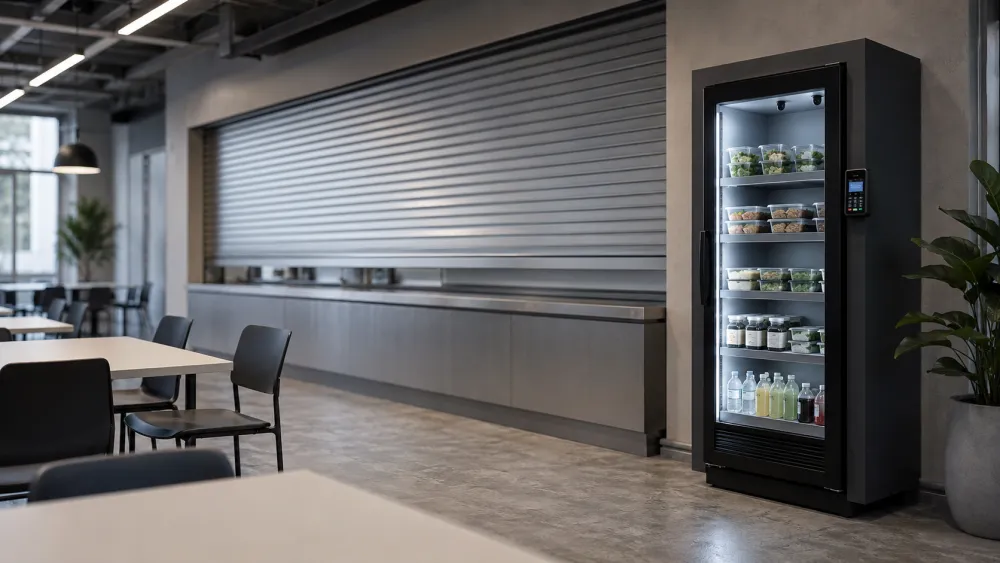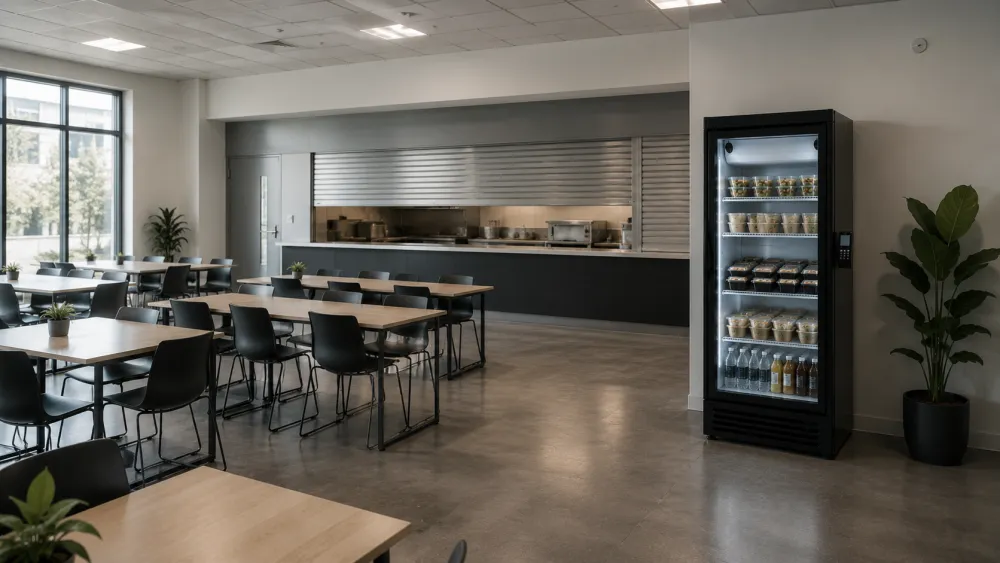
In most canteens that come under review, the food is fine. They have simply become underused: hybrid working halved the lunch peak, breaks became flexible, and a growing share of shifts works at hours when the kitchen is closed anyway. Meanwhile the fixed cost stayed the same. Below is what you can do without your people losing out.
A canteen is built on one assumption: that roughly the same number of people come to eat at the same time every day. Once that assumption goes, the kitchen costs just as much to run for half the plates. Staff, space, energy and waste do not scale down with it.
On top of that, a canteen follows kitchen hours, and those rarely match the hours of your site. Anyone who starts at five or takes a break at eleven at night never got anything out of it, not even when it was full.
The three side by side, including where the canteen wins. Looking only at cost means deciding on half the picture. If you want to see the cost side first, the factors are under what a smart fridge costs.
| Staff canteen | Sandwich or catering service | Smart fridge | |
|---|---|---|---|
| Available | Only during kitchen hours | At delivery time | Any hour, nights and weekends too |
| Freshly cooked on site | Yes | Partly | No: freshly made, heated up on site |
| Fixed cost when quiet | Keeps running in full | Falls with use, but ordering stays work | No kitchen staff or fixed hours |
| Eating together | Its strongest point | Possible in the eating area | Depends on the eating area, which stays |
| Work for your people | A full kitchen team | Collecting and ordering every day | Restocking, by one person or a supplier |
Is your canteen full at one clear lunchtime? Keep it. At most, put a fridge next to it for the hours before and after.

How many plates a day, at what times, and what share of your people never go. That figure drives the decision.
Involve employee representatives, where you have them, before anything is fixed. A change to food provision is rarely purely practical.
Put the fridge next to the canteen first. After a few weeks you see in black and white what is taken where.
Scale down, combine or leave everything as it is. You decide on measured use rather than an assumption.

The cause is usually the hours and the numbers. A canteen runs on a lunch peak of roughly an hour and a half; as soon as hybrid working, shift work or flexible breaks spread that peak out, the basis for running it falls away. The fixed costs of staff, space and energy stay the same however many people come that day.
Two things: a hot meal cooked on site, and the social moment of sitting down together. The first you partly make up for with fresh meals heated on site. The second belongs to the eating area, not the kitchen, so it is best to keep that room, even without canteen staff.
In some situations, yes. If your people eat a hot meal together at one time and your canteen is full, do not replace it. If it runs half empty, is only open a few hours while your site runs longer, or a growing part of the team does not eat there, then a smart fridge with fresh meals covers more moments for less fixed cost.
Talk mainly about what is added: food before seven, after two, at weekends and during a meeting that overruns, with halal, kosher, vegetarian and vegan included. Involve employee representatives early where you have them, because a change to food provision is rarely a detail. Have the formal steps confirmed by your HR or employment adviser.
Yes, and that is often the better move. The canteen keeps lunchtime, the fridge covers the hours around it: the early shift, the late shift, weekends and the days the kitchen is closed. That way you do not have to cut anything to close the gap you feel now.
Eight short questions about your site and your current offer. We call you back and tell you whether a fridge solves something for you, or whether your canteen is better left as it is.
Takes about 90 seconds · no obligation · no contact details until the last step