What a staff restaurant costs depends mostly on the days it is open, far less on the number of meals served. Staff, space and energy keep running, even when thirty people come to eat instead of eighty. The cost of having no food offer at all is covered in a business without a canteen; this page sets out the cost lines of a canteen itself, so you know what you are budgeting.
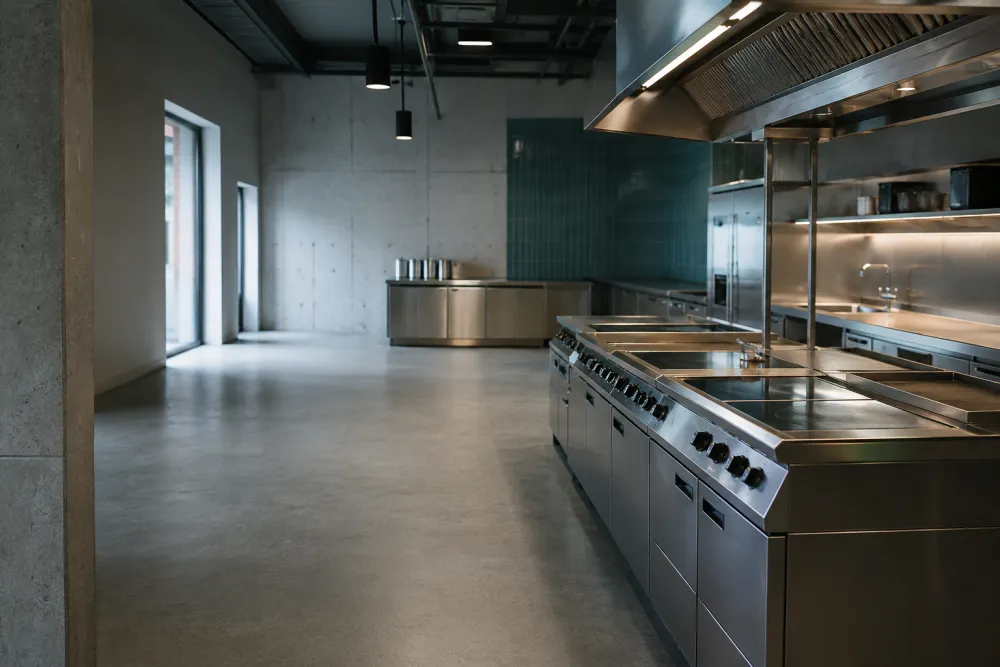
The visible cost is the food. The bigger lines are the people who cook and serve, the space kept free for it, the kitchen’s energy and what goes in the bin after service. How heavily they weigh depends on how many meals go out per opening day. What happens to the leftovers is covered in food waste at work.
Most of these lines do not fall when fewer people turn up. That is why canteens come under pressure as soon as hybrid work or shift work spreads out the lunch peak; see a business without a canteen for the other side of the sum.
| Run in-house | Caterer on concession | Fridge next to an eating area | |
|---|---|---|---|
| Fixed cost | High: own staff and kitchen | Medium: fee or minimum spend | Low: a spot and a socket |
| Falls with attendance | Barely | Partly, depending on the contract | Yes, restocked to what sells |
| Outside lunchtime | Rarely | Rarely | Any hour, nights included |
| Who carries leftovers | You | Per the contract | You or your supplier, kept low by ordering to sales |
| Hot, cooked on site | Yes | Yes | No, reheated |
The right-hand column is what we make; bear that in mind as you read. A fourth way to spend the budget, without any food on site, is a meal voucher or allowance; what it does and does not solve is covered in meal vouchers and food at work.

How many meals really go over the counter, for each day of the week?
Put the opening hours next to the hours people work. Who falls outside?
How much is thrown away at the end of service, and who pays for it?
What share of your people never eats in the canteen, and why not?
In a care facility the cafeteria closes in the evening while the building keeps running; how that is solved there is covered in a smart fridge for care facilities.

If your restaurant is full every lunchtime and most people eat at the same moment, it is often the best solution. The fixed cost is spread over many meals. The main remaining question is what happens outside opening hours.
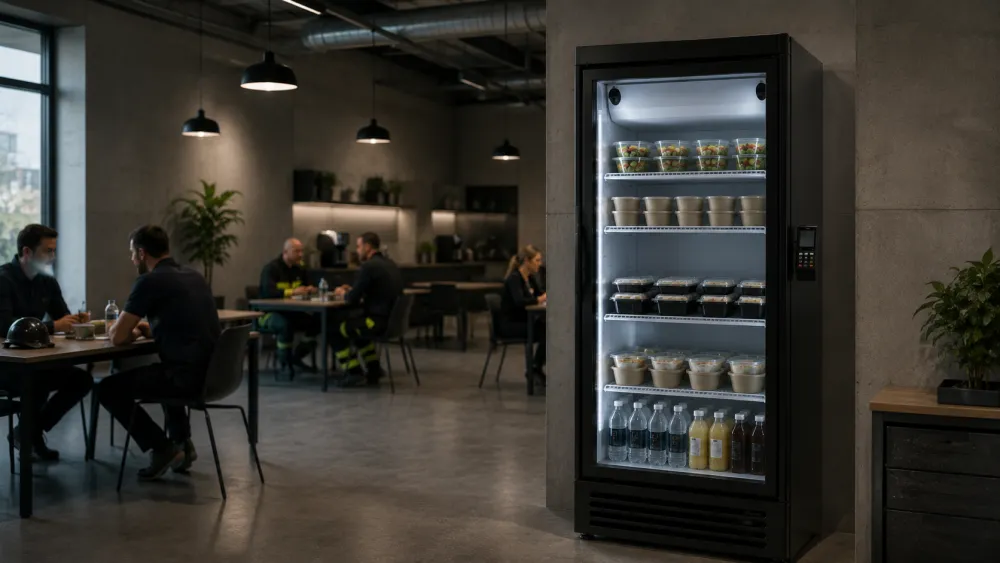
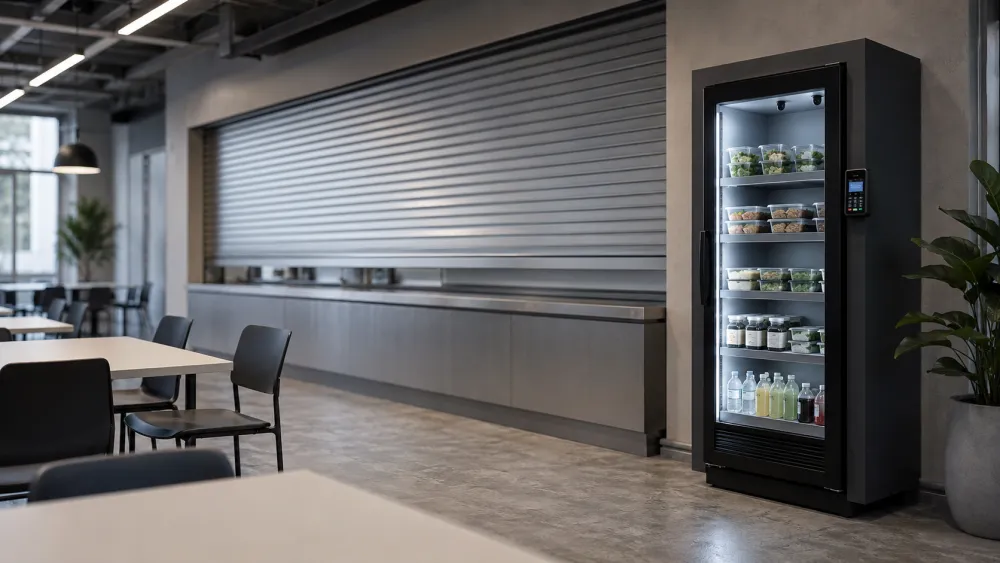
That is where a fridge next to the canteen can cover the hours around it, without cutting anything back. How that works in practice is covered in an alternative to the staff canteen. What such a fridge costs is covered in what a smart fridge costs.
That depends on the contract and on your attendance. A caterer takes over staff and purchasing, but often asks for a minimum spend or a fee that keeps running when attendance is low. Put both next to your real number of meals per day.
Staff, space, energy and the caterer’s contract usually fall little or not at all. Food purchasing does fall, but it is rarely the largest line.
Many companies do. How such a subsidy is treated for tax and payroll depends on your country and situation, so have it confirmed by your accountant or payroll adviser.
There is no fixed threshold. A canteen works best on a large site with one clear lunchtime when most people eat together. As soon as the hours spread out, the fixed cost per meal rises quickly.
Yes. The canteen keeps lunchtime, the fridge covers the hours around it: the early start, the late shift and the weekend. That way the canteen does not have to stay open longer to serve those people.
Eight short questions about your people and hours. We will tell you whether a fridge can complement your canteen, or whether it is better left as it is.
Takes about 90 seconds · no obligation · no contact details until the last step