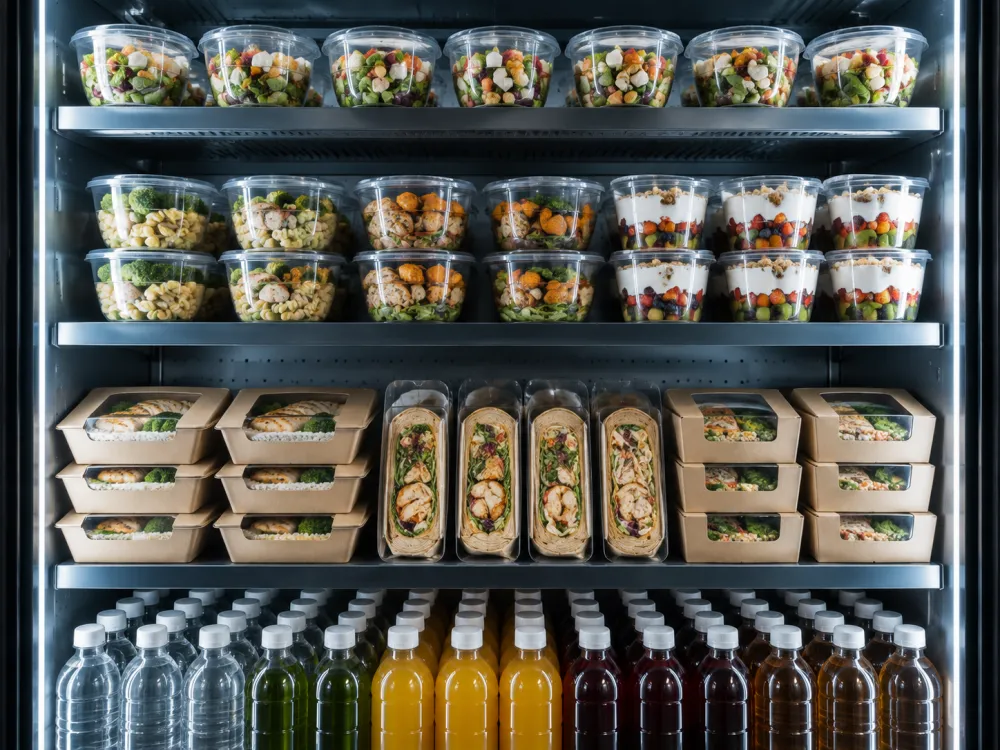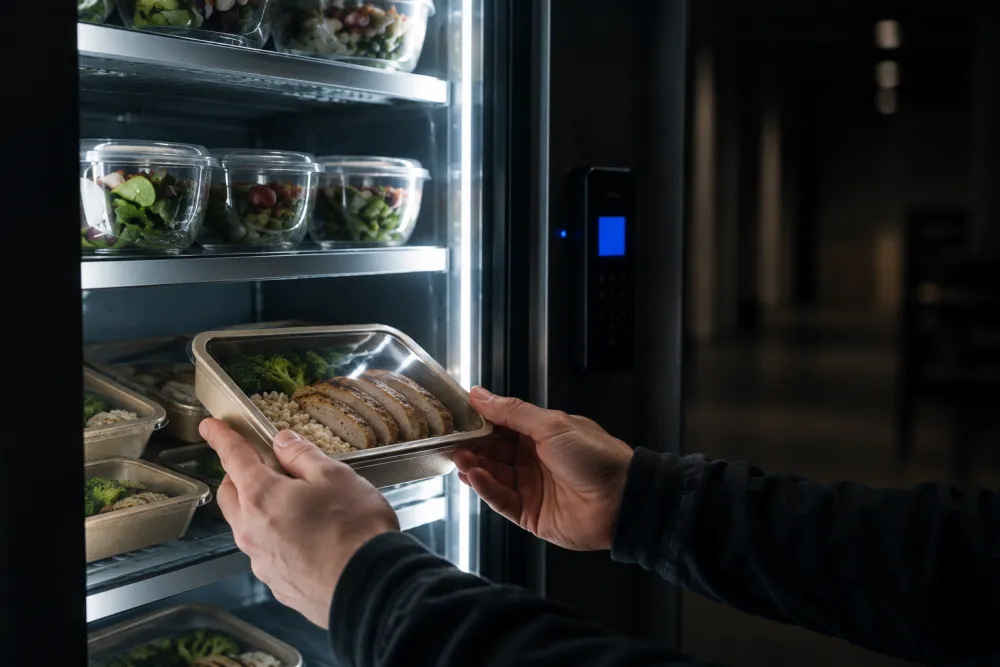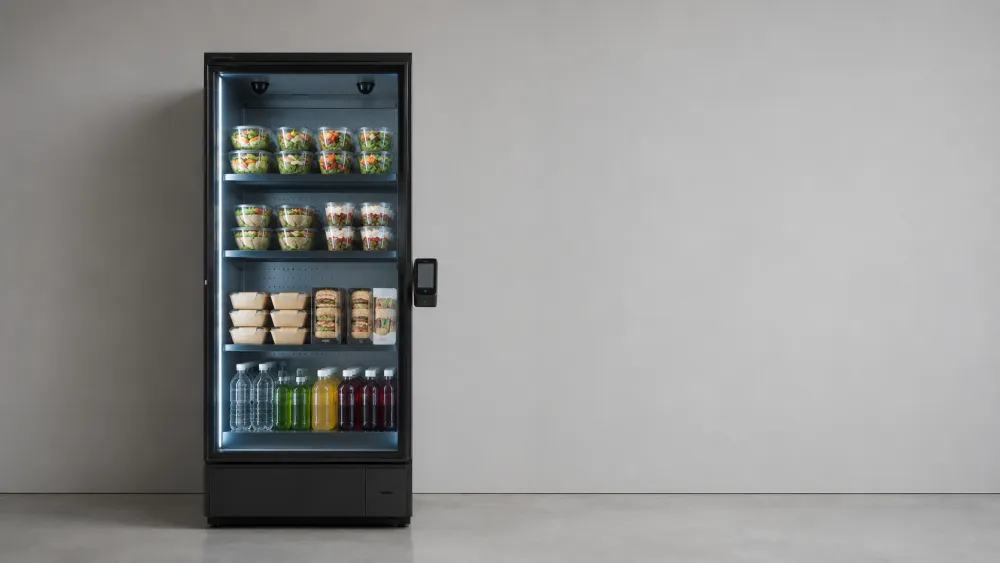
The same fridge sells all day in one place and stands half full in another. The difference comes from how many people pass by, at how many moments, and how much is left over. What a smart fridge costs is covered under the price factors; this page is about the other side of the sum.
Footfall is the number of people passing each day, multiplied by the moments they need something. Hours count because every shift is a new moment: a site with three shifts has three lunchtimes. Unsold stock is whatever does not sell and has to go.
The three are linked. More footfall means products turn over faster and pass their date less often. Little footfall means fresh items run up against their date, and then a range with a longer shelf life is the better choice.
| Buy | Rent | Lease | |
|---|---|---|---|
| You carry | The unit, purchasing, maintenance and unsold stock | The rental fee, purchasing and unsold stock | The instalments, purchasing and unsold stock |
| The revenue | All yours | Yours | Yours |
| Pays off when | Footfall is high and the logistics are already in place | You want to test a site before committing | The site is proven and you want to spread the cost |
| Risk with low footfall | Yours | Limited to the rental term | Yours, for the contract term |

Not the headcount on the payroll, but how many are actually on site on a normal day, contractors included.
At which hours is there nothing now: before eight, after the canteen closes, at night, at weekends?
How many people drive off to eat, and how long are they gone? More under business without a canteen.
Fresh food only turns over with enough footfall. Why is explained under fresh meals.

With fewer than fifty people on office hours and a sandwich shop round the corner, a smart fridge rarely gets enough footfall. A well-managed supply cupboard or a traditional machine is then often the better choice, and we say so. If you are considering a traditional machine, first read what to look for when buying a vending machine.
Hours weigh at least as much as headcount. Thirty people on shifts on a site with no shops can make a fridge run better than a hundred people on a high street. That is why the site check asks about both.
That depends entirely on footfall, the margin you take and what is left over. A payback period without your figures would be a guess. After the site check we work it out for your situation.
Both, and they reinforce each other. The number of people decides how much can be bought at one moment, the hours how many moments there are. A smaller site with shifts and nothing nearby therefore often does better than a larger office with a canteen round the corner.
That is up to you: cost price, a margin, or even free as a perk. Without a margin, the unit and maintenance are paid from another budget.
Sales per product show it. The starting range is rarely the range three months later: what stays disappears, what sells gets more space. If use stays structurally too low, it is better to rethink the site or the model than to leave a half-full fridge standing.
It counts in your decision, but not on an invoice. Work out for your site how many people drive off on a normal day and how long that takes. That figure is yours and says more than an average from a brochure.
Eight short questions about people, hours and what is there now. We assess your site and tell you whether a smart fridge would pay off there, even if the answer is no.
Takes about 90 seconds · no obligation · no contact details until the last step