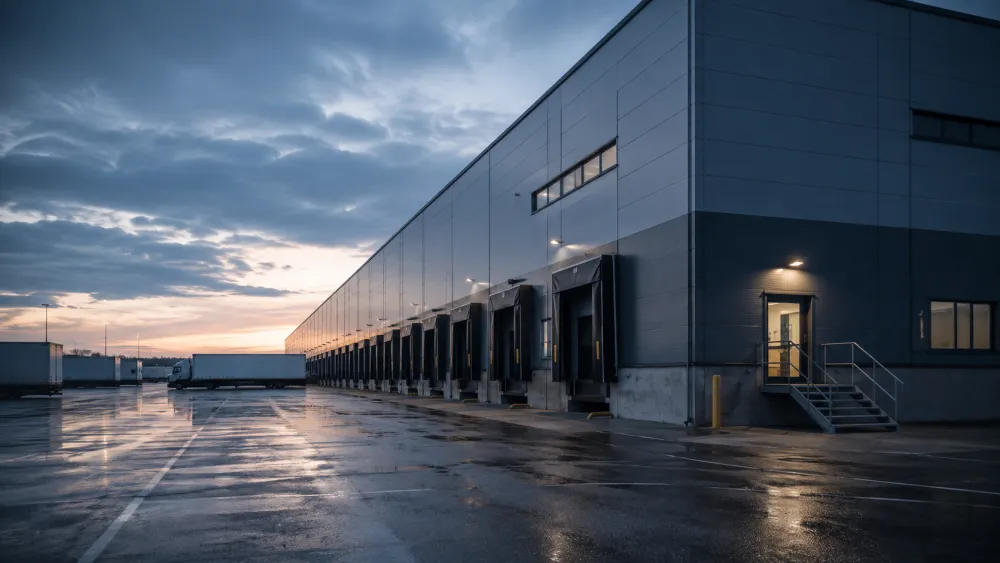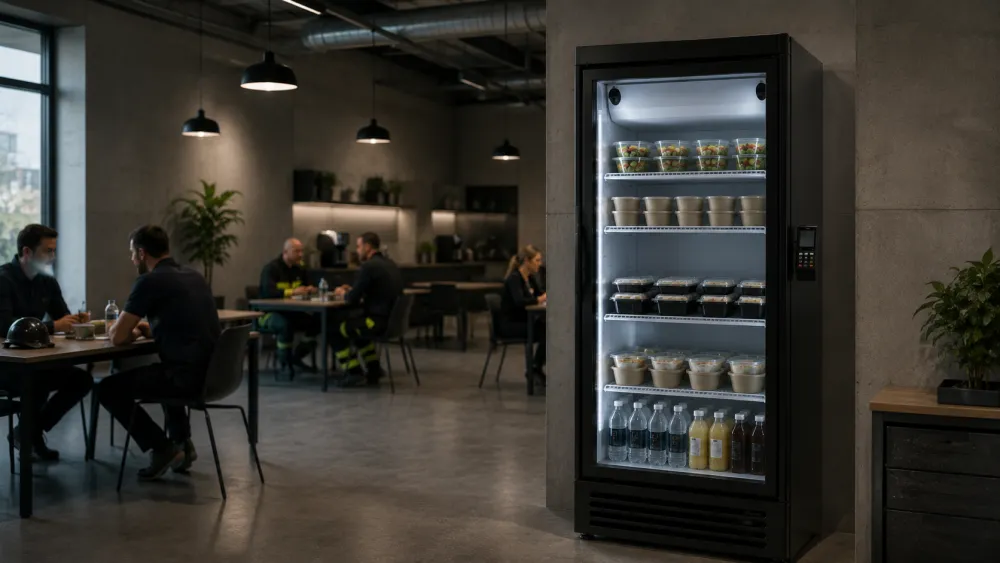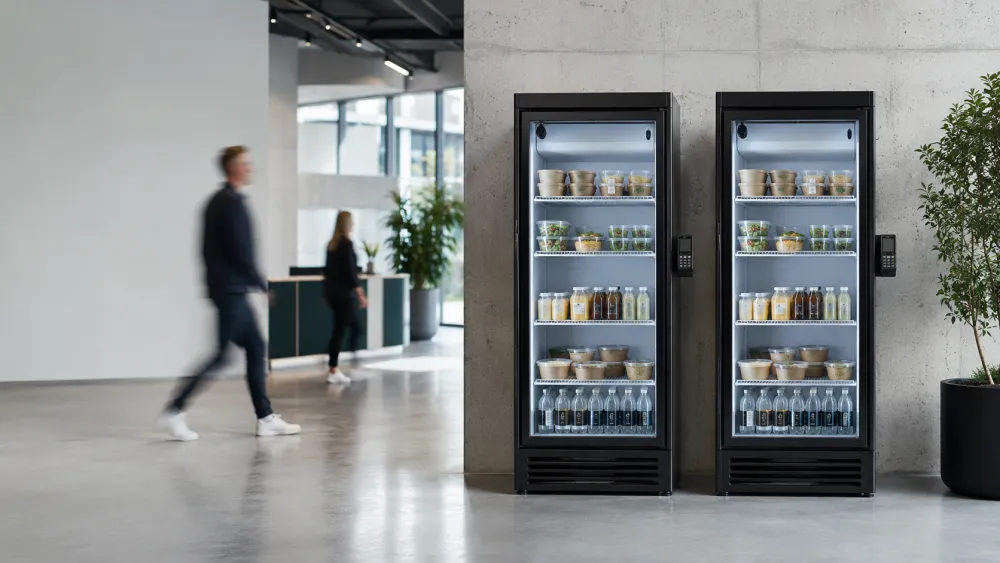
On a large site, break time is mostly lost on the site itself. The canteen is at the far end of the hall, it only serves the day shift, and in some buildings the lift alone costs ten minutes. One fridge will not solve that. This page shows how to spread units across a site and keep the whole thing manageable.
On a site with hundreds of people, the walk to the canteen is often the biggest loss of a break. Someone with twenty minutes who spends eight of them walking eats in a rush or not at all. With a fridge by every break room, that walk disappears.
Shifts matter too. The canteen is set up for lunchtime, but the late and night shifts eat at other hours. A fridge next to the canteen covers those hours, and the canteen gives up nothing. How the two fit together is covered under alternatives to a staff canteen.
| Spot | Who reaches it | Strong when |
|---|---|---|
| By the break room of each hall | That hall’s shift | Breaks are short and the halls far apart |
| At the entrance or time clock | Everyone at the start and end of a shift | People take something for later |
| Inside and outside the safety zone | Your own shifts and external drivers | Hauliers wait on site every day. More under logistics |
| Next to the canteen | Anyone eating outside canteen hours | The canteen is full at lunch but quiet the rest of the day |
The number and size of units depend on how many people work and at what hours. We give you that figure after the site check and the call.

Start where there is least to eat today, often the night shift, the furthest hall or the dock area.
Per fridge, the software shows what sells and at what times, which is more reliable than a survey.
Range and restocking rhythm are set per spot, because people eat differently in a hall than in an office wing.
An extra fridge only goes where the sales figures call for it. Those figures also make the case to senior management.
If it is about several branches rather than one large site, the approach is described under healthy vending for businesses.

One proposal covers all the units, with its own range per spot. Sales per fridge show where there is too little or too much, and the next round is adjusted to that. Whoever restocks, your own team, your caterer or a local operator, sees the same figures.
If you are thinking more of an open shop with shelves and a self-checkout, read what a micro market does differently from a row of closed fridges.
That does not follow from headcount alone. Where people work, how far apart the break rooms are and how many shifts run weigh just as much. After the site check and the call you get a proposal with the number of units and where they go, and we advise starting smaller rather than bigger.
Yes, and usually it should. In a production hall with physical work, different portions sell than in an office wing, and the night shift chooses different products from the early shift. Each fridge is topped up on its own sales.
Yes. The software shows per fridge and per product what is taken. That way you see which spot works well and where a fridge would do better elsewhere or with a different range.
Both run side by side. Your caterer keeps lunchtime, the fridges take the other hours and the spots far from the canteen. Your caterer can even restock the fridges, if you agree that with them.
The proposal covers all the units together. How invoicing works in practice is set out in the proposal for your site.
Eight short questions, then a call about your halls, shifts and break rooms. We suggest where the first fridge should go.
Takes about 90 seconds · no obligation · no contact details until the last step